

News
Concert Performance – MangrOOve at the Afrikaribik Festival in Bayreuth’s City Center
31.07.2025
On the occasion of the 20th anniversary of the Afro-Caribbean Festival Wakadjo, the Africa Multiple Cluster presented a concert performance by MangrOOve at the Stadtparkett in the City of Bayreuth. The event constituted a public-facing cultural activity that translated the Cluster’s core research approaches into an artistic format and engaged a broad, non-academic audience.
The 2025 edition of the Afro-Karibik Festival Bayreuth – Wakadjo marked a significant milestone in the cultural life of the city. Under the anniversary theme of connection, sustainability, and continuity, the festival once again transformed Bayreuth’s city center into a vibrant space for African and Caribbean music, dance, art, and culinary traditions. Over the course of three days, it attracted a wide and diverse audience, reinforcing its role as one of the region’s most visible platforms for intercultural exchange.
In 2025, the University of Bayreuth itself celebrated an anniversary year, which contributed to its particularly prominent presence within the festival framework. The double anniversary constellation – 20 years of Wakadjo and the university’s own milestone year – created a symbolic moment of reflection and visibility. The university’s strong engagement, especially through its Africa-focused research profile, highlighted the longstanding connections between academic inquiry and the cultural landscape of the city. In this context, the involvement of the Africa Multiple Cluster of Excellence exemplified how institutional research priorities were translated into public cultural programming and shared urban experience.
Within this broader framework, the MangrOOve concert represented a central artistic contribution of the Cluster to the festival programme. MangrOOve brings together four internationally recognized solo musicians who have been affiliated with the Cluster since its establishment in 2019. Band leader Matchume Zango (Mozambique) – master of the wooden xylophone timbila, percussionist, composer, and producer and a regular partner in the Cluster’s cooperation with schools; Childo Tomás (Mozambique) – bassist, percussionist, and singer; Tao Ravao (Madagascar) – guitarist and specialist of the traditional valiha harp; and Chang Jae Hyo (South Korea) – percussionist and singer.
The band name, a conceptual fusion of groove and mangrove, symbolizes interconnectedness, resilience, and cultural diversity, reflecting the Cluster’s emphasis on relationality and multiplicity. Musically, the ensemble combines deeply rooted traditions with global soundscapes, thereby embodying key research perspectives of the Cluster in performative form.

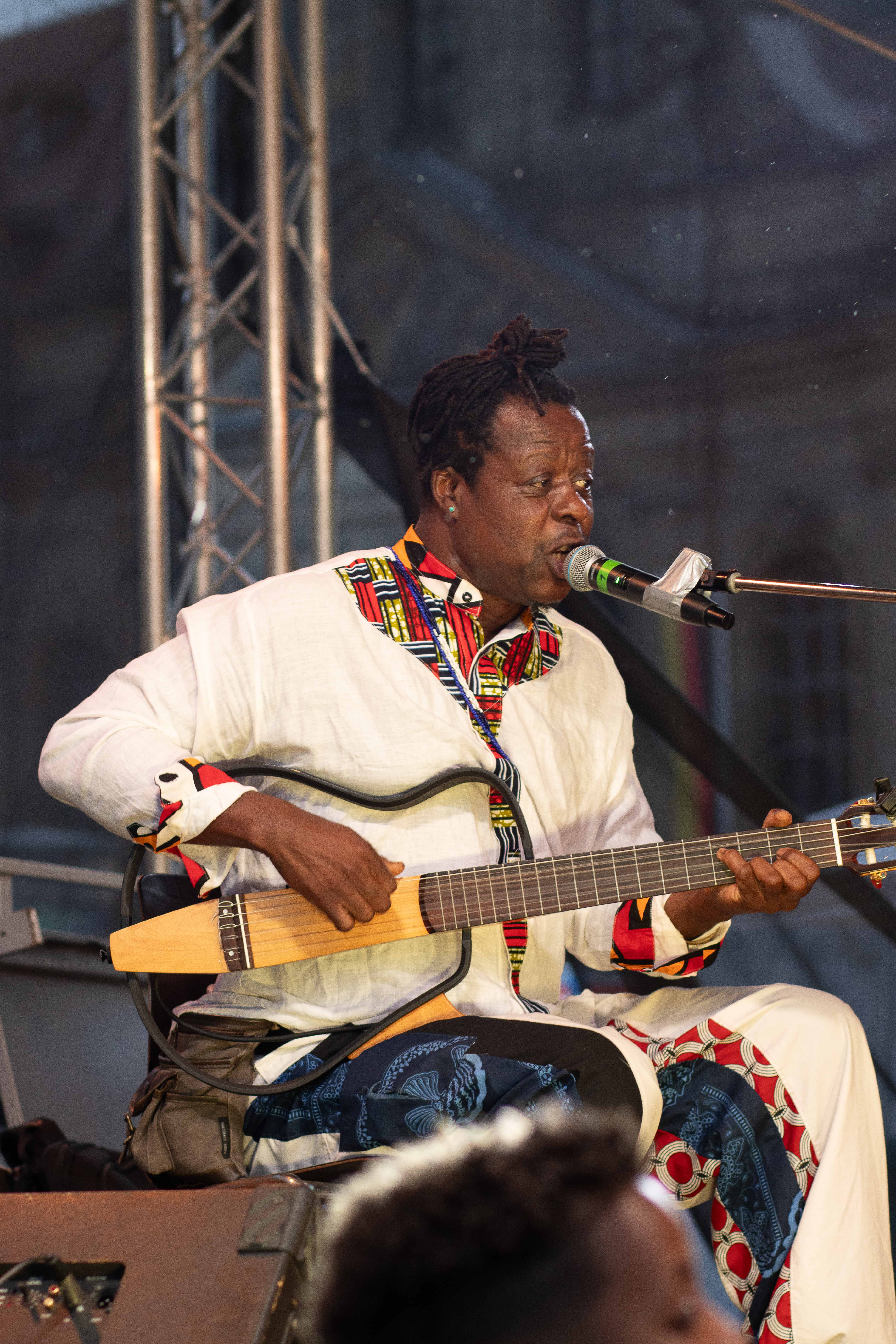
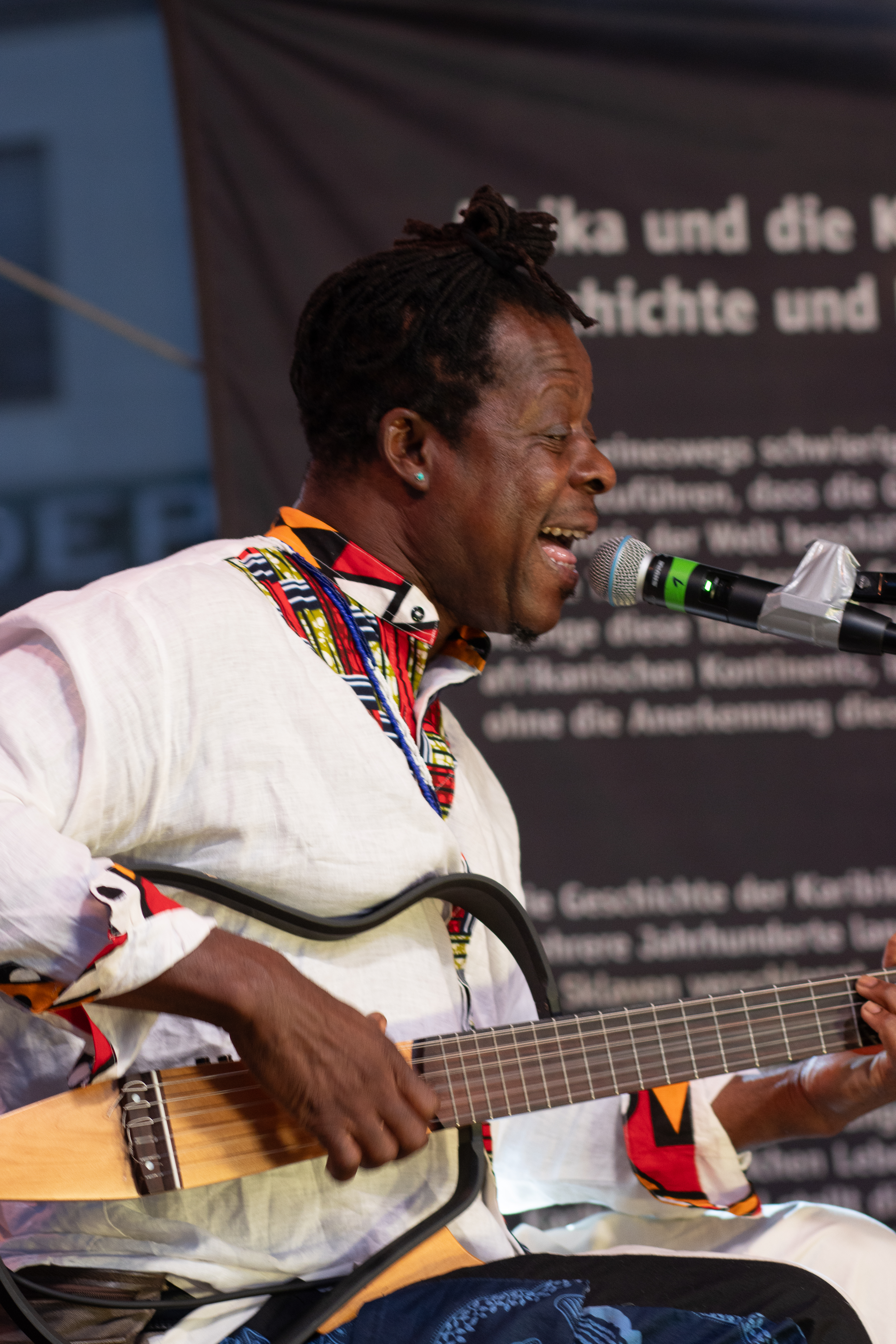

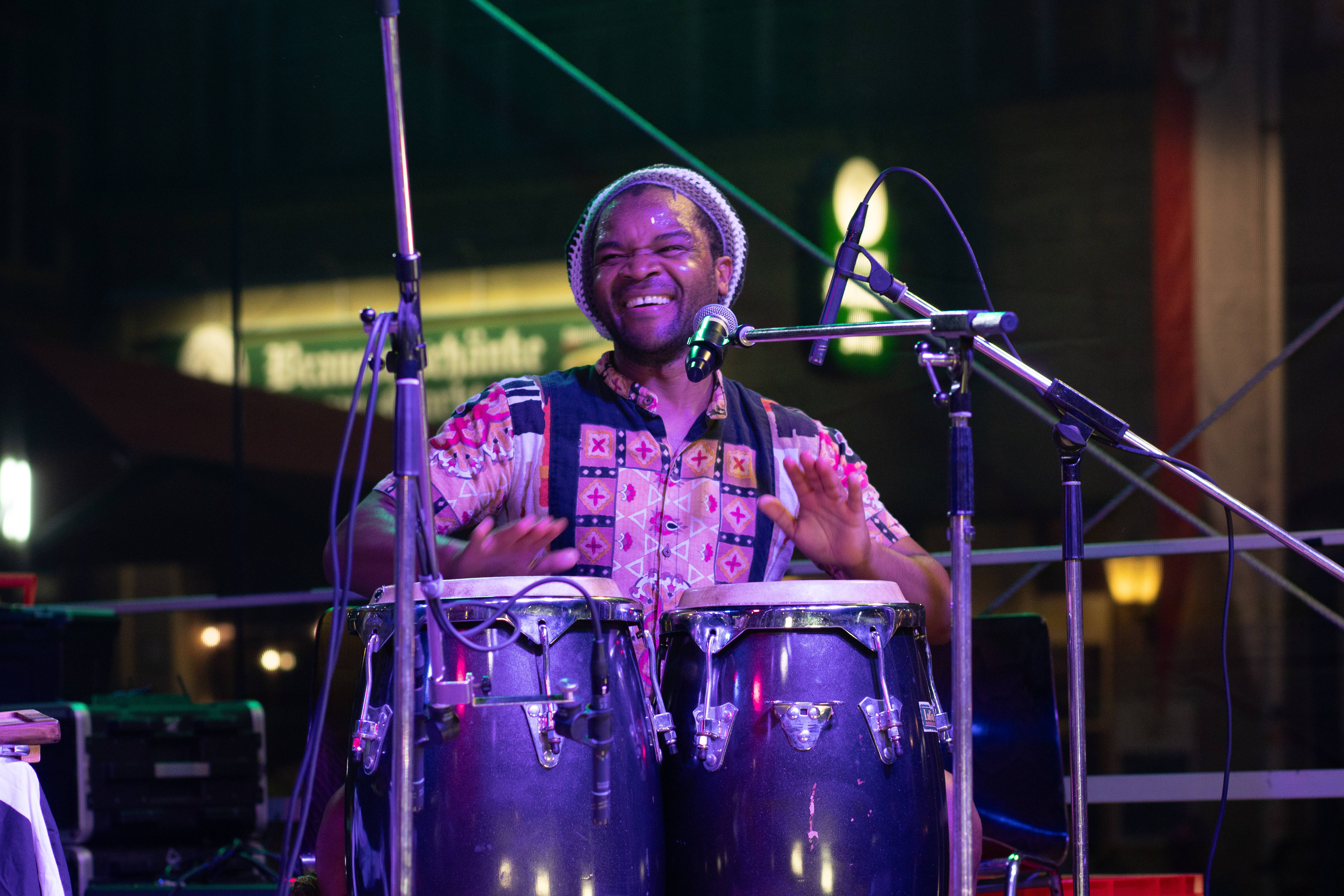
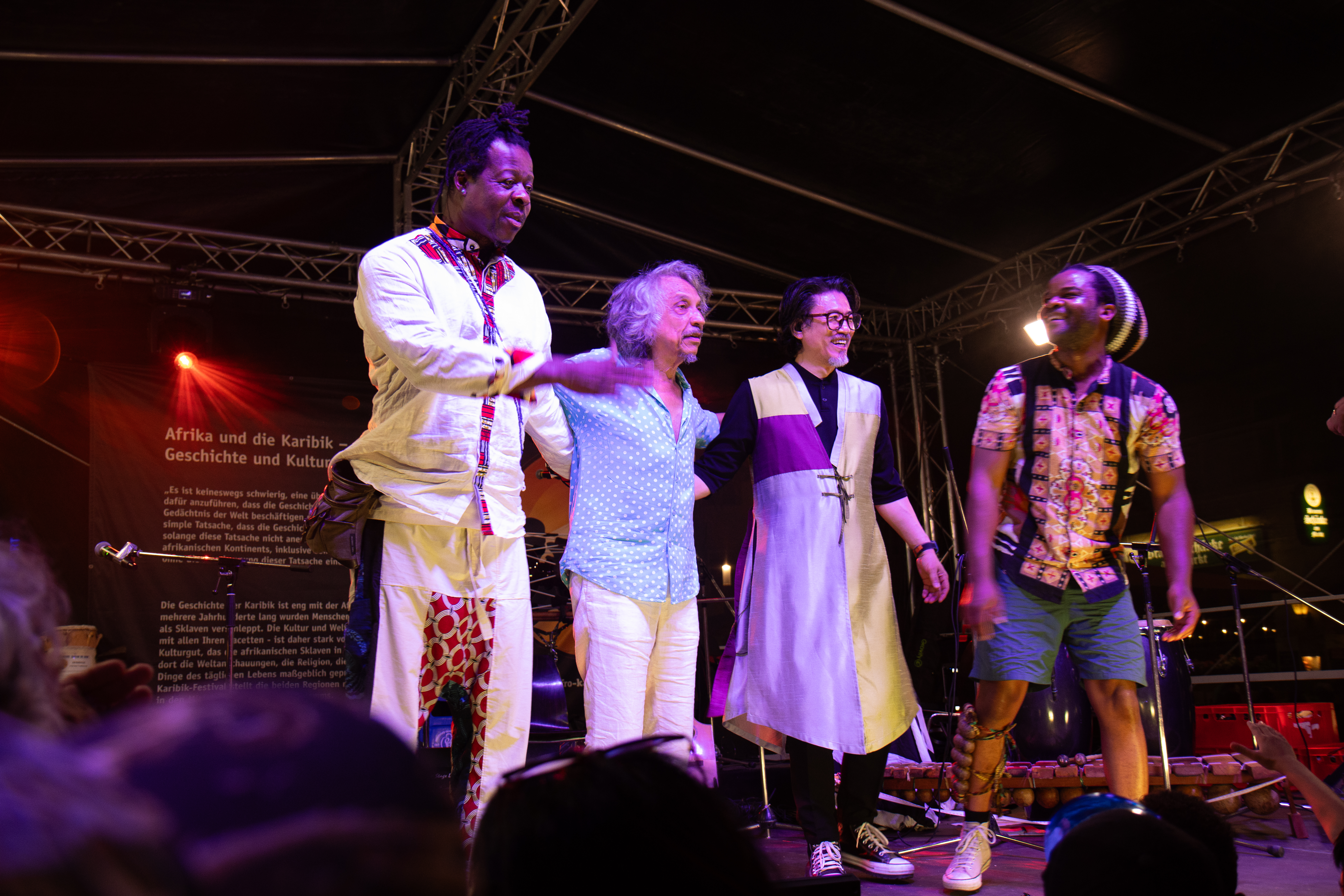
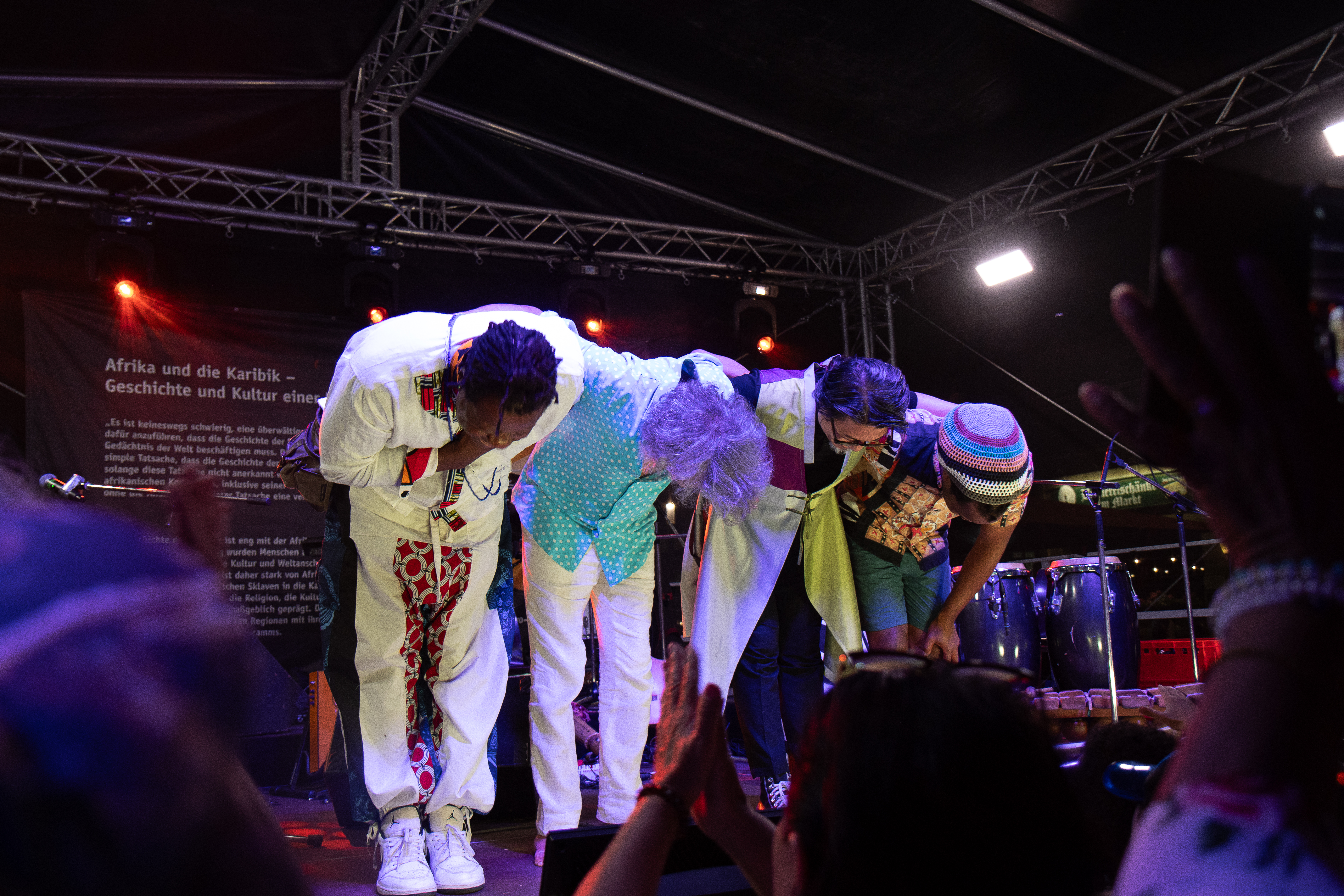
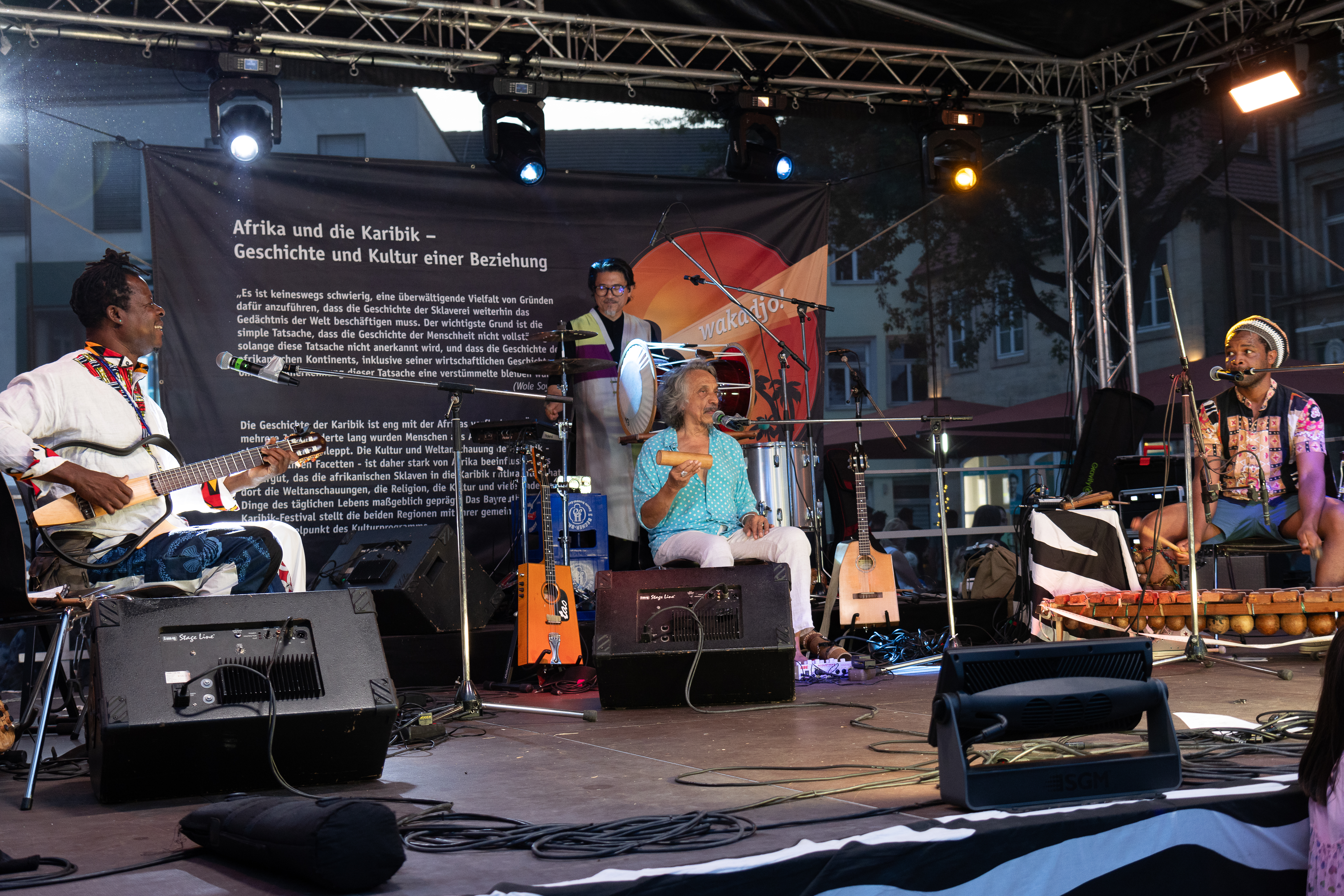
The 2025 collaboration also built upon a longer history of artistic exchange within the Cluster. Seven years earlier, four of the present members, together with musician Eun Kyung Kim from South Korea, had composed and performed an interdisciplinary concert at the Margravial Opera House, which served as the opening event of the Cluster’s first research phase. That earlier performance translated the methodological principles of relationality and reflexivity into sound and spanned musical traditions from Mozambique and Madagascar to South Korea. The composition emerged from processes of joint interpretation and intercultural musical development, closely aligned with the Cluster’s research agenda.
The reunion in Bayreuth in 2025 thus resulted in a new performance that created a sonic meeting place of musical worlds. Rhythms associated with the Indian Ocean region were combined with groove-oriented traditions linked to the Atlantic region, resulting in a dynamic world-music fusion characterised by improvisation, depth, and high artistic intensity.
Presented at prime time, the concert marked one of the highlights of the festival programme and was met with strong audience engagement. The lively interaction and spontaneous dancing of attendees demonstrated the communicative and participatory potential of the performance. As such, the event successfully contributed to the Cluster’s objectives of knowledge transfer, public engagement, and the integration of artistic practice into academic research contexts.