
News
Ingoduko (Homecoming): Thandeka Mfinyongo’s Artist Residency in Bayreuth
01.08.2025

From December 2024 to March 2025, South African musician, performer, and ethnomusicologist Thandeka Mfinyongo spent four months as artist fellow at the Iwalewahaus in Bayreuth. With her academic host, Dr Katharina Greven, and supported by the close collaboration of Silvan Spohr, Sabine Linn, and Jubilian Ngaruwa, her residency unfolded as an immersive encounter with Indigenous knowledge, artistic research, and communal creativity. What emerged was not only a project but a living environment of shared learning and cultural reflection.
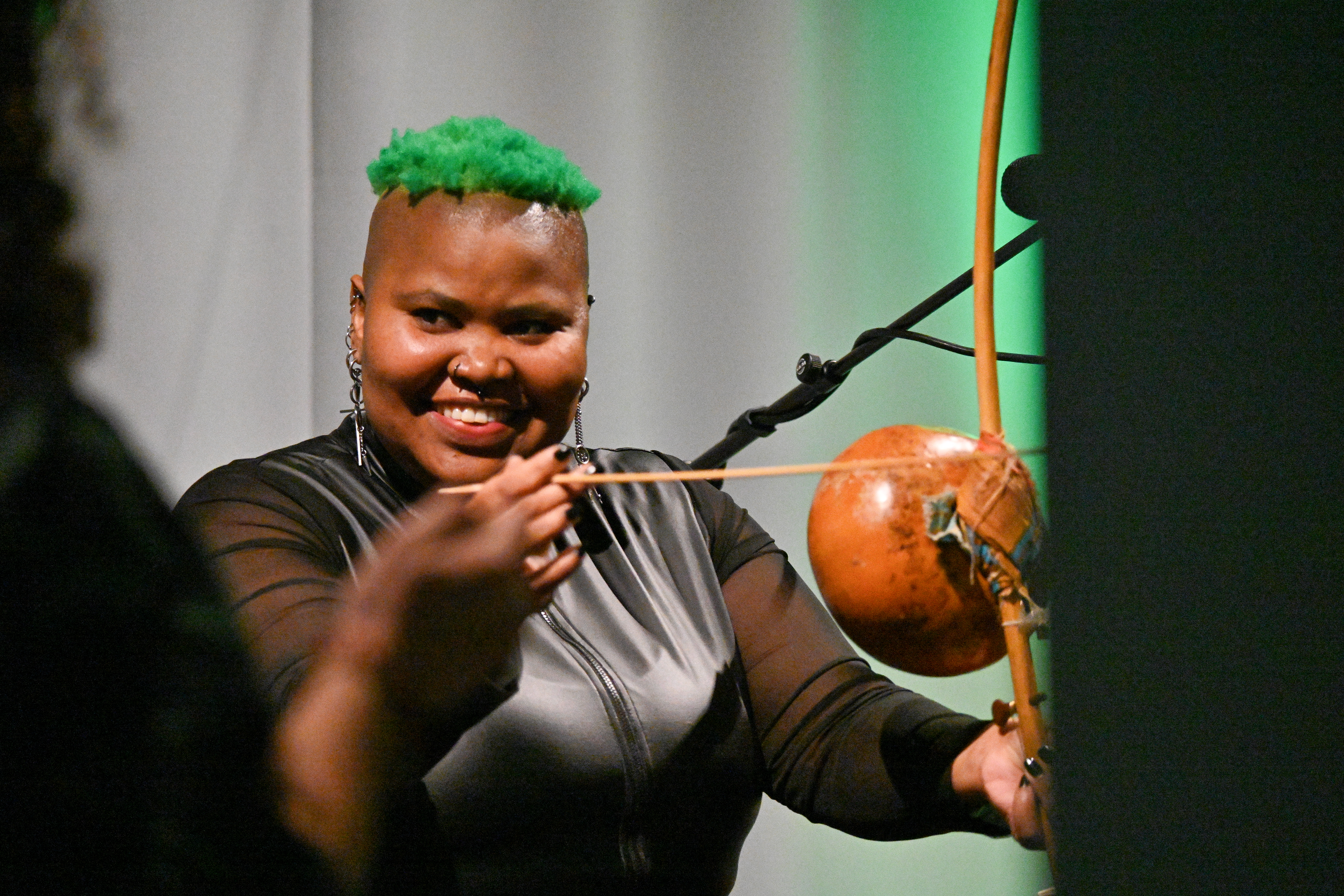
At the heart of her stay stood Ingoduko (Homecoming), a project devoted to the Xhosa bow instruments uhadi and umrhubhe. In her academic work, Mfinyongo conceptualises these bows as ideogrammatic archives – objects that store memory, history, and emotion through their materiality. She argues that instruments are carriers of ancestral presence and cultural continuity, and that the act of playing or building them unlocks layers of meaning that cannot be accessed through text alone. This understanding shaped her entire residency, which combined performance, research, writing, and sensory engagement in equal measure.
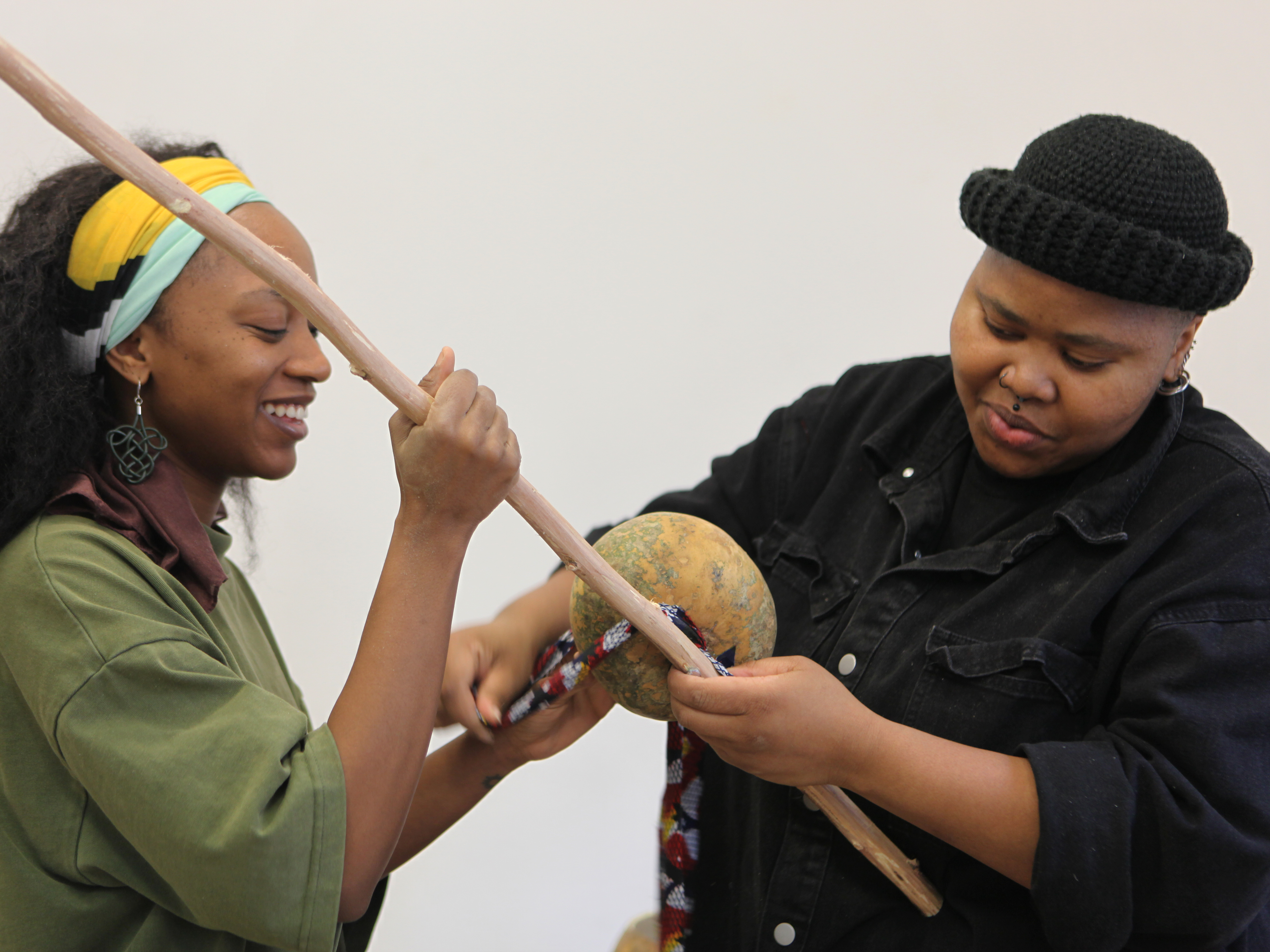
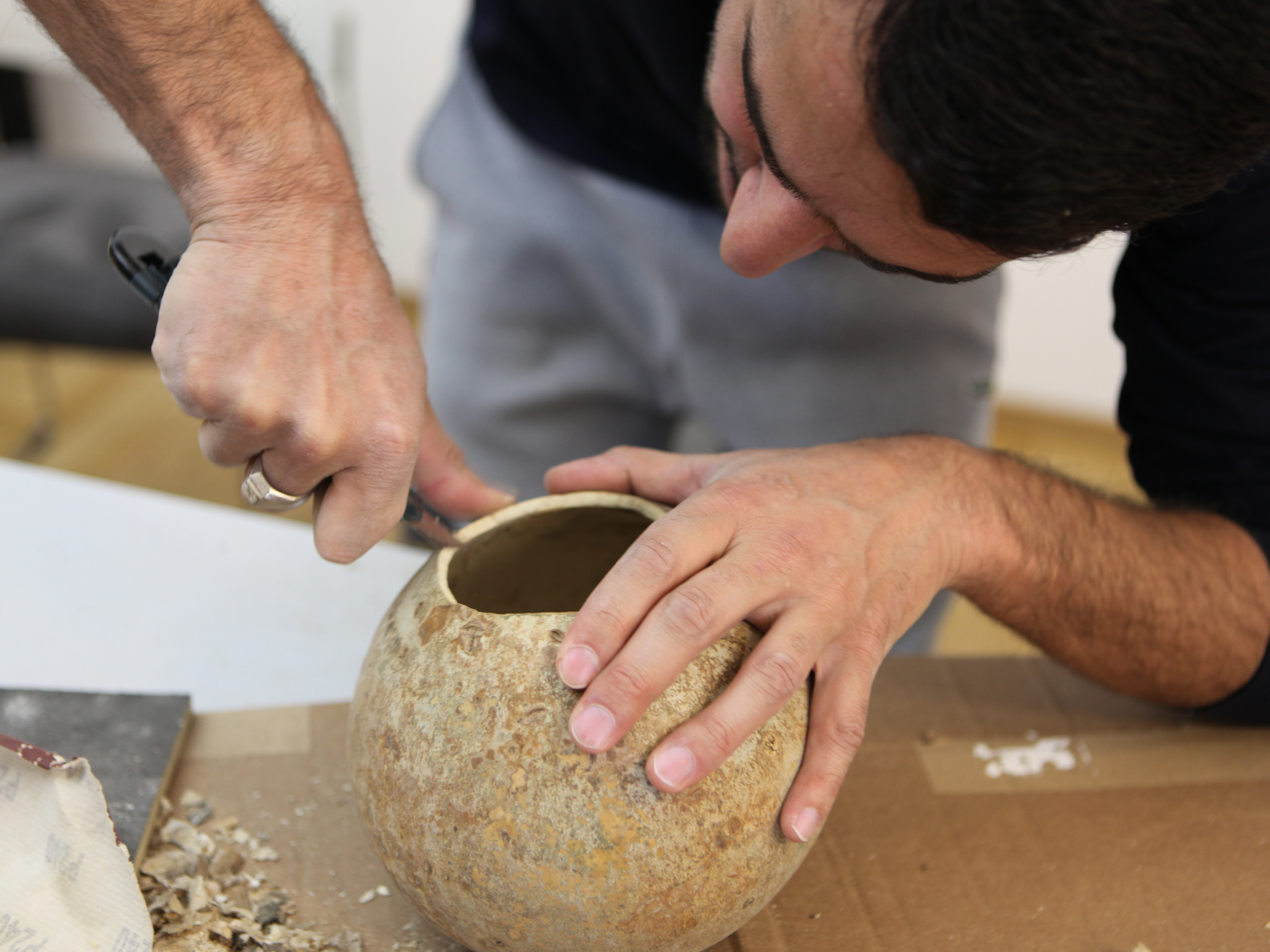

Her academic practice remained an integral part of her artistic work. While in Bayreuth, she continued writing about the cultural significance of bow music, the politics of Indigenous sound, and the embodied experience of crafting instruments. She approaches instrument-making not simply as a technical process, but as a form of alternative knowledge production, one that arises through touch, repetition, breath, and shared attention. The haptic qualities of bending wood, testing resonance, and working with natural materials became, for her and the participants, moments of learning that emerged directly from the senses.
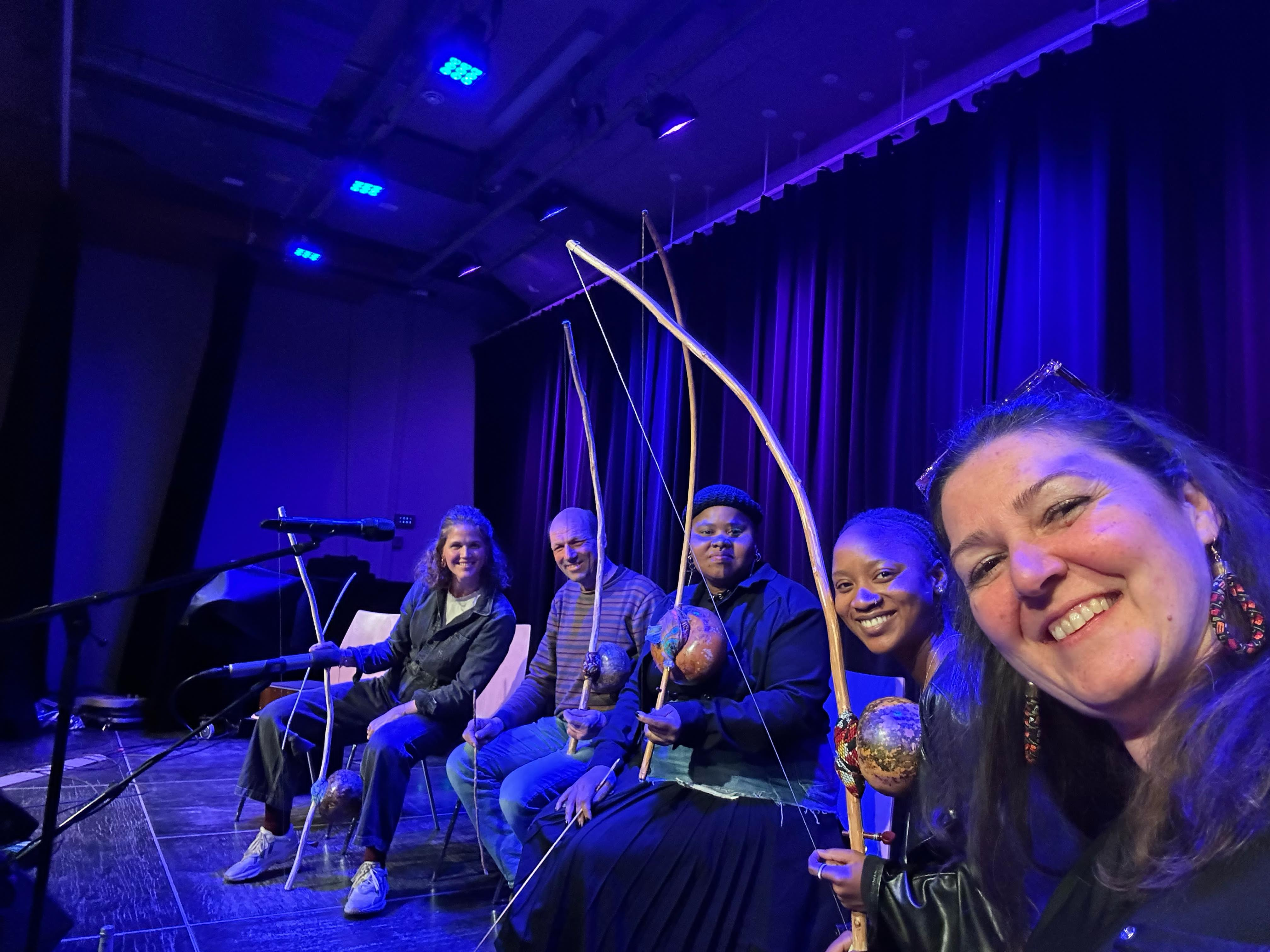
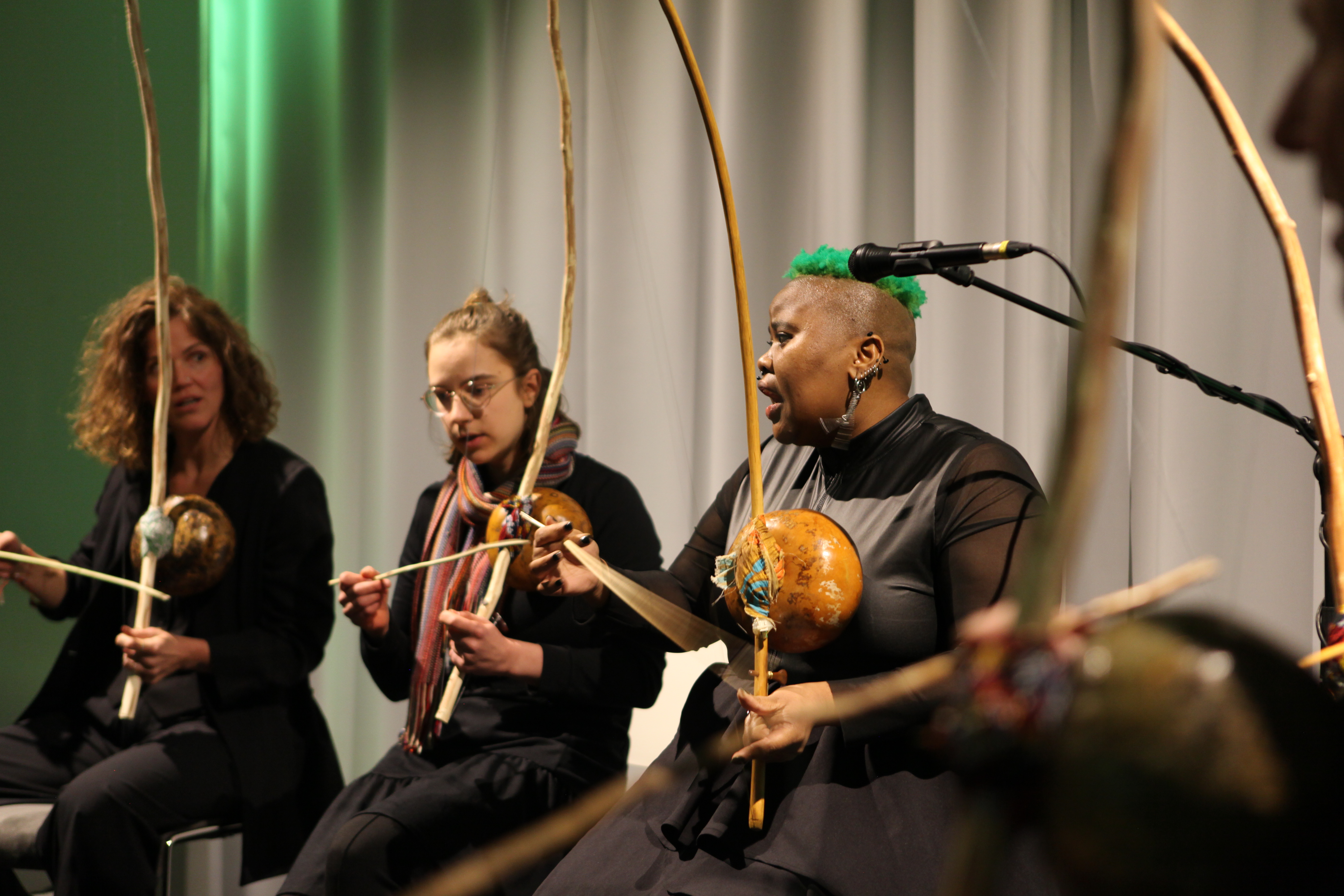
This became especially visible in the extended workshop that unfolded across January and February. Participants joined her in gathering materials from the surrounding forests in Bayreuth, merging it with sticks and calabashes from South Africa, then spent weeks building and rehearsing together. Through this communal work, a small learning community formed—one that moved, listened, and experimented as a collective. Many described the experience as transformative, as if the simple rhythm of craft and rehearsal created its own kind of magic. The workshop became a space where intergenerational and intercultural knowledge could be passed on not through instruction alone, but through gestures, shared labour, and the intimate exchange of sound.
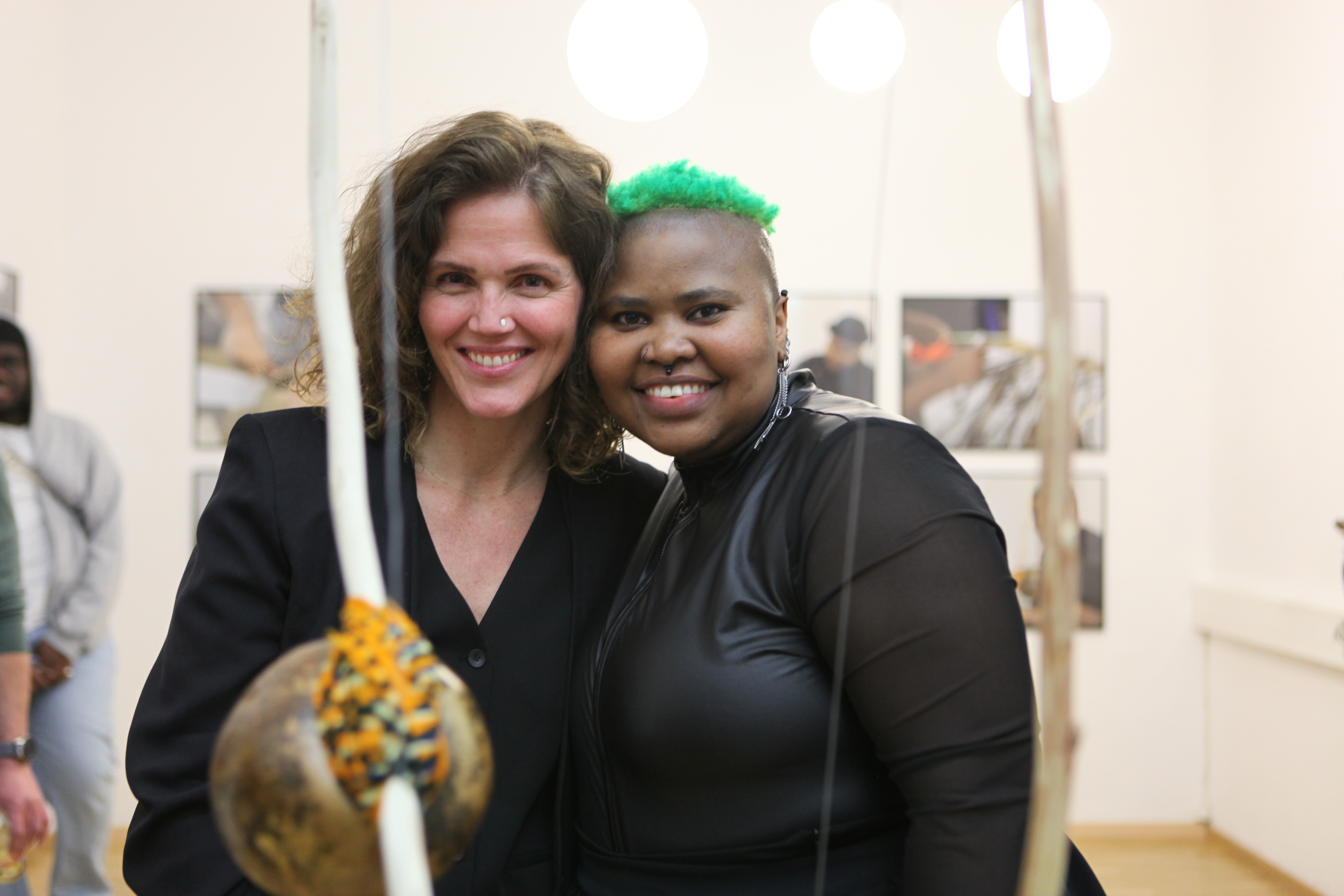
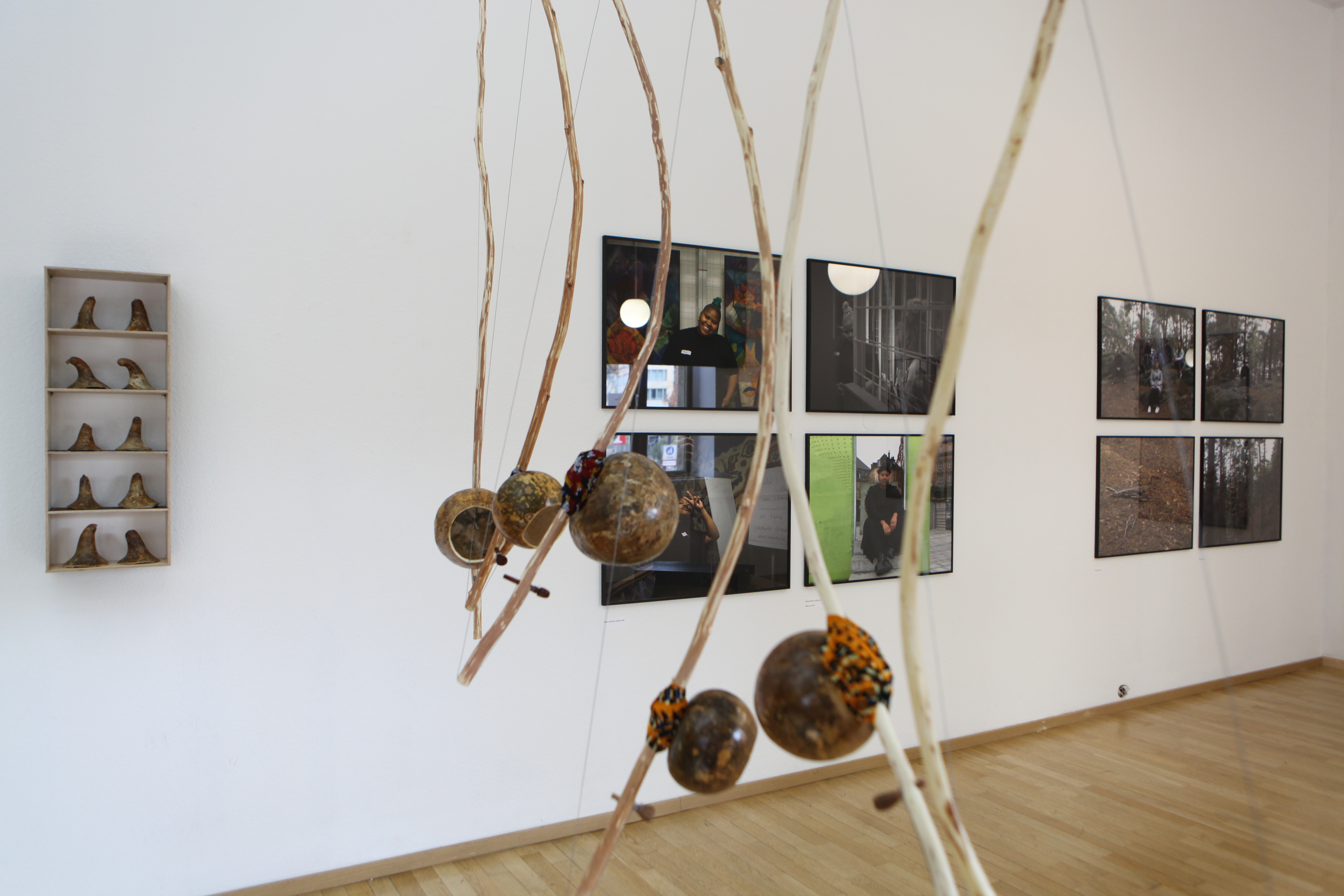
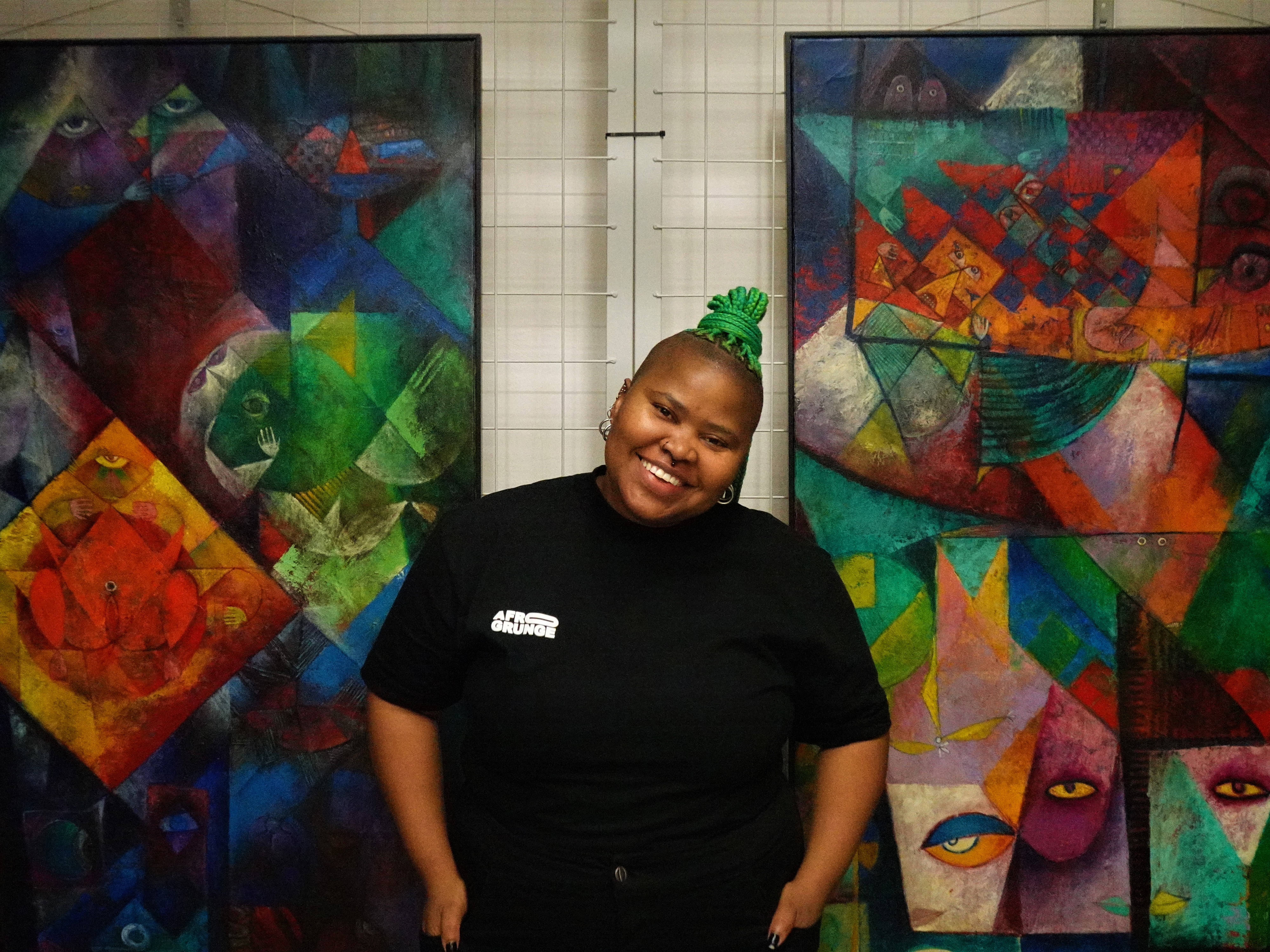
In March, the residency culminated in the Pop-up Exhibition in Iwalewahaus Echoes of Tradition. It brought together the handcrafted instruments, photographic reflections and a documentary film produced during the residency. The exhibition offered a window into the sensory, communal, and intellectual processes that defined Ingoduko, showing how artistic homecoming emerges through collective effort rather than nostalgic return.
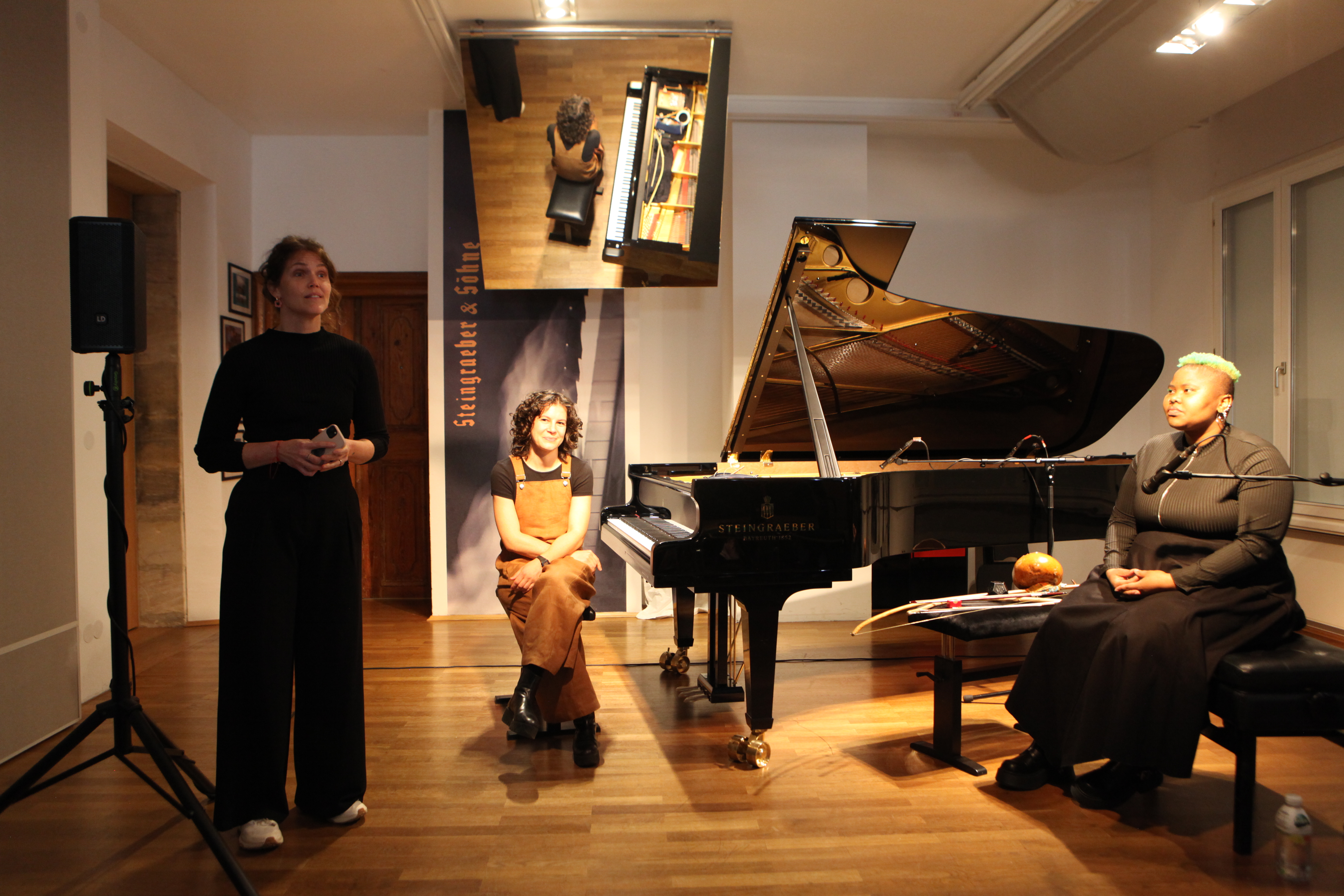
The final month also featured a series of concerts at the südpunkt in Nürnberg, at the Iwalewahaus, and at the Steingraeber-Haus in collaboration with musician and perfomer Coila-Leah Enderstein. These performances revealed the expressive depth of the bows and demonstrated how Indigenous instruments can resonate powerfully within contemporary artistic settings, creating conversations that reached beyond linguistic and cultural boundaries.
The residency generated a broad range of documentation. A richly curated photographic archive (by Sabine Linn) captured the rhythms and textures of the project, while two audio recordings expanded its sonic footprint (recorded and edited by Silvan Spohr). The film, directed by Jubilian Ngaruwa, shown in the exhibition offered an intimate view of the daily practices that shaped the residency, and a second documentary by filmmaker Lisa Burn in collaboration with CampusTV, later showcased at the Mediennacht in November 2025, extended the project into a wider public arena. Ingoduko also became the focus of Episode 30 of the “Cluster Conversations” podcast, where Mfinyongo and Dr Greven explored the artistic, cultural, and scholarly layers of the residency.
Through Ingoduko, Thandeka Mfinyongo created a space where sound, craft, writing, memory, and community converged. Her residency demonstrated how Indigenous musical traditions can be carried forward through hands and senses as much as through theory and text, offering Bayreuth and especially the Iwalewahaus, a powerful experience of how knowledge lives, moves, and is shared through the act of making together.
Text: Katharina Greven
Find out more about Thandeka Mfinyongo and her stay here