
News
New Year Lecture 2026: Worldmaking in Thought, Image and Sound
26.01.2026
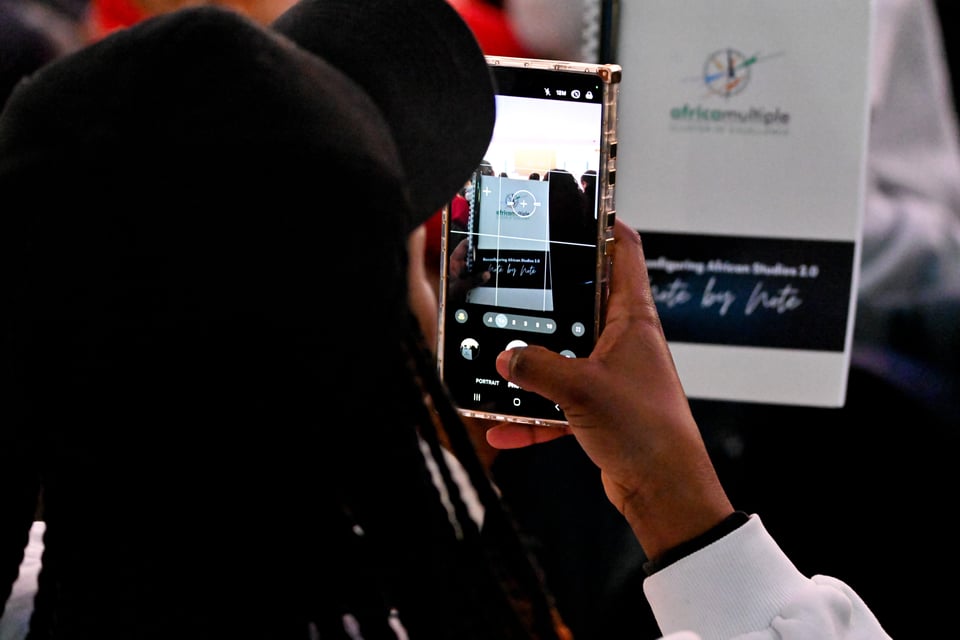
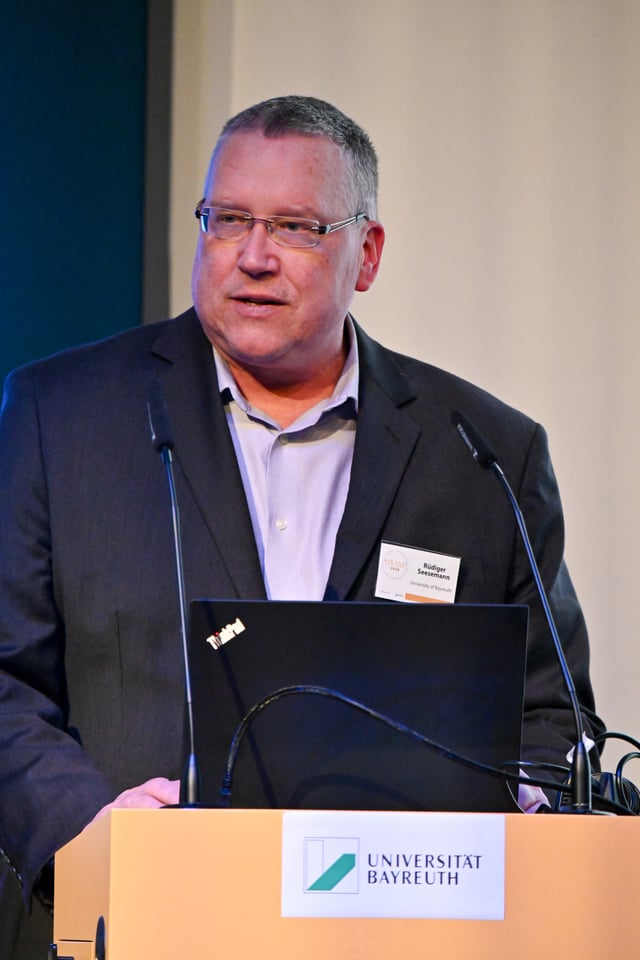
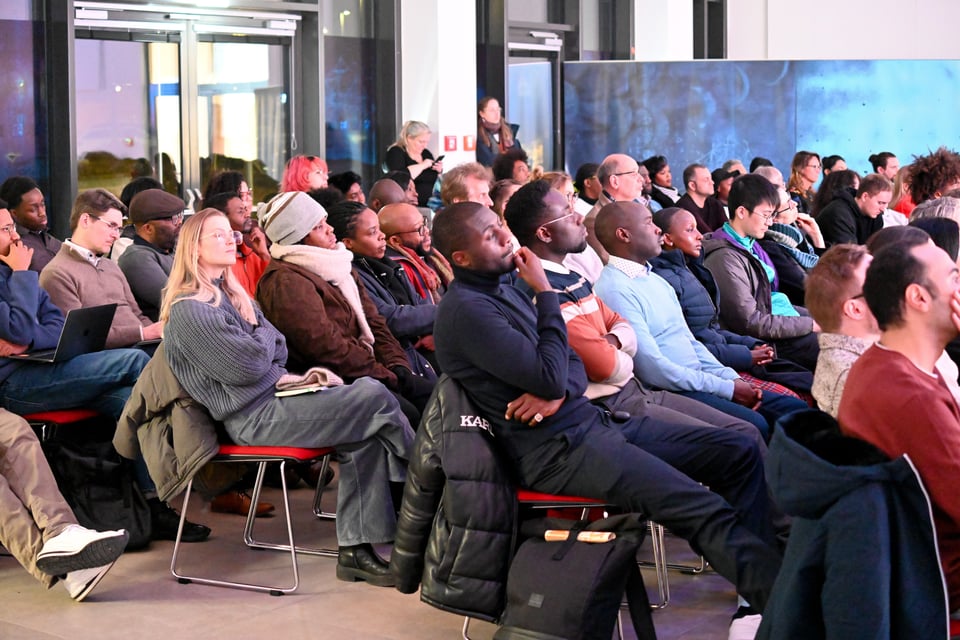
On 22 January 2026, the Africa Multiple Cluster of Excellence opened the new year with a special New Year Lecture that marked the beginning of the Cluster’s second funding phase under Germany’s Excellence Strategy. Conceived under the guiding theme of “worldmaking”, the evening brought together a keynote lecture, a multi-media installation and live concert. Curated by Prof. Dr. Ute Fendler, deputy spokesperson of the Cluster, the programme blurred the boundaries between scholarship and artistic practice.
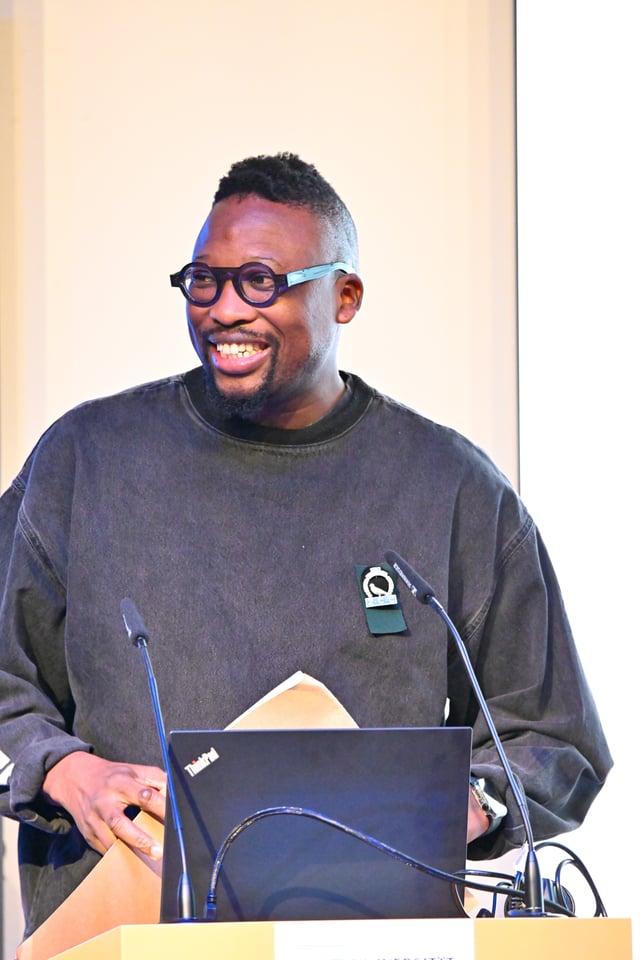
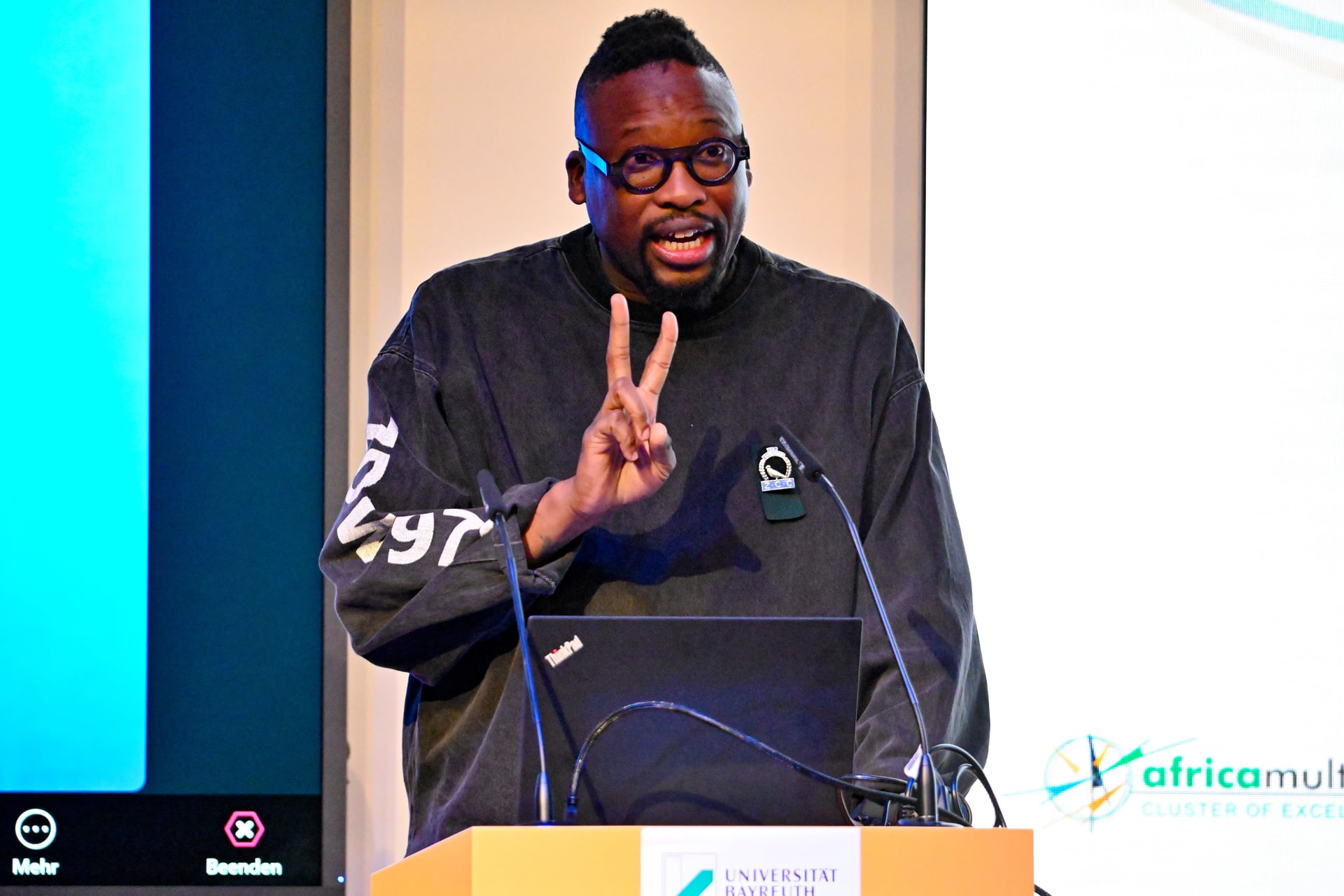
The keynote, entitled “This Thing is Black, Blue, and Beautiful: On the Inter-Portraiture of Beauford Delaney and James Baldwin”, was delivered by Prof. Dr. Tendayi Sithole of the University of South Africa. Sithole is widely known for his work in black political thought and critical theory, and his lecture offered a philosophically rich meditation on beauty, blackness and creative reciprocity. Beginning from the proposition that beauty is everywhere yet always contested, he argued that beauty is neither neutral nor universally granted. It is framed, selected and often denied. Historically, black life has been positioned outside the category of the beautiful. To speak of “the black and the beautiful”, therefore, is to insist on black life as a site of imaginative power and worldmaking.
Drawing on the work of Ronald Judy, Sithole introduced the concepts of confluence and “thinking-in-disorder”. Where blackness and beauty meet, he suggested, something generative occurs. Discord does not signal failure but becomes the ground of invention. Through what Judy calls poēisis-in-black, black sociality registers and refigures existence beyond the symbolic and material orders that seek to contain it. Central to this process is the blues lyric, understood not simply as a musical genre but as a mode of articulation in which tragedy and beauty, improvisation and discipline, coexist. The blues, in this sense, is a practice of ongoing reworking rather than a finished form.
Within this conceptual framework, Sithole turned to the artistic and intellectual exchange between Beauford Delaney and James Baldwin. Their encounter began in 1940, when the young Baldwin knocked on Delaney’s studio door in Greenwich Village. In 1944, Delaney drew his now celebrated portrait of Baldwin; in 1965, Baldwin responded with his essay “On the Painter Beauford Delaney”. Sithole described this reciprocal gesture as inter-portraiture: a mutual act of seeing and inscription through which each artist registered and refigured the other. At the heart of this exchange lay the study of light. Baldwin famously wrote that he learned about light from Delaney – the light in every surface and every face. Sithole lingered on this motif, presenting light not as sentimental metaphor but as radical practice. In a world structured by anti-blackness, the study of light becomes a refusal of imposed darkness. Delaney’s later paintings in Paris, where he settled permanently after 1953, underwent what Baldwin called a metamorphosis into freedom. Beauty here was not decorative but insurgent.
Sithole also reflected on exile and movement. Baldwin left the United States in 1946; Delaney followed in 1953. Paris became a site of reorientation, not escape. Their work deepened in abstraction and intensity, continuing to wrestle with the blues as call and response, interruption and eruption. Beauty, Sithole argued, is paraphrastic: a rewriting that clarifies and transforms without seeking closure. Through inter-portraiture, Delaney and Baldwin enacted a black grammaticality that insisted on freedom as an ongoing, unfinished task.
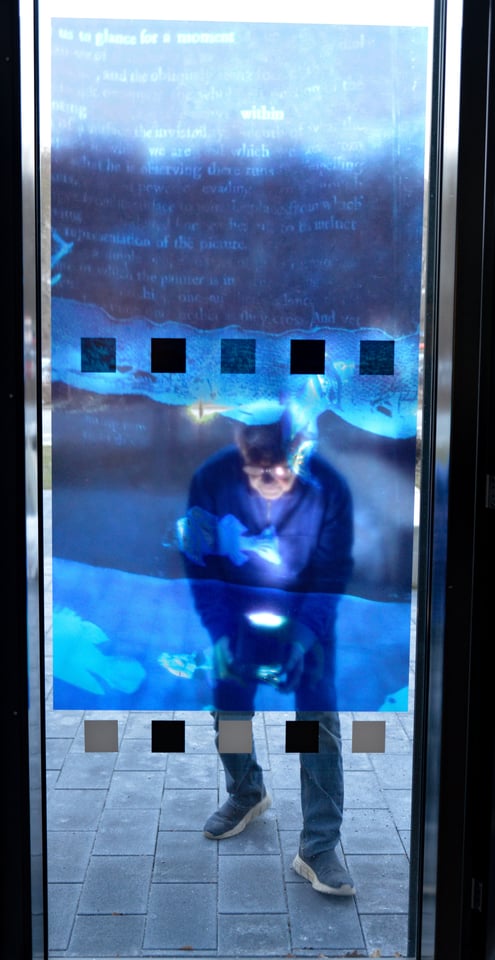
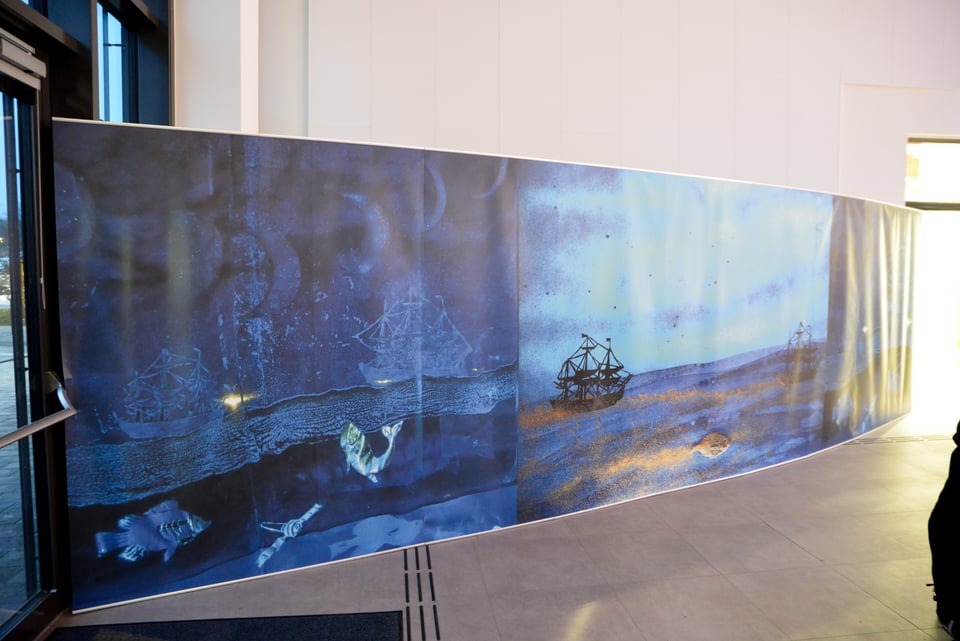
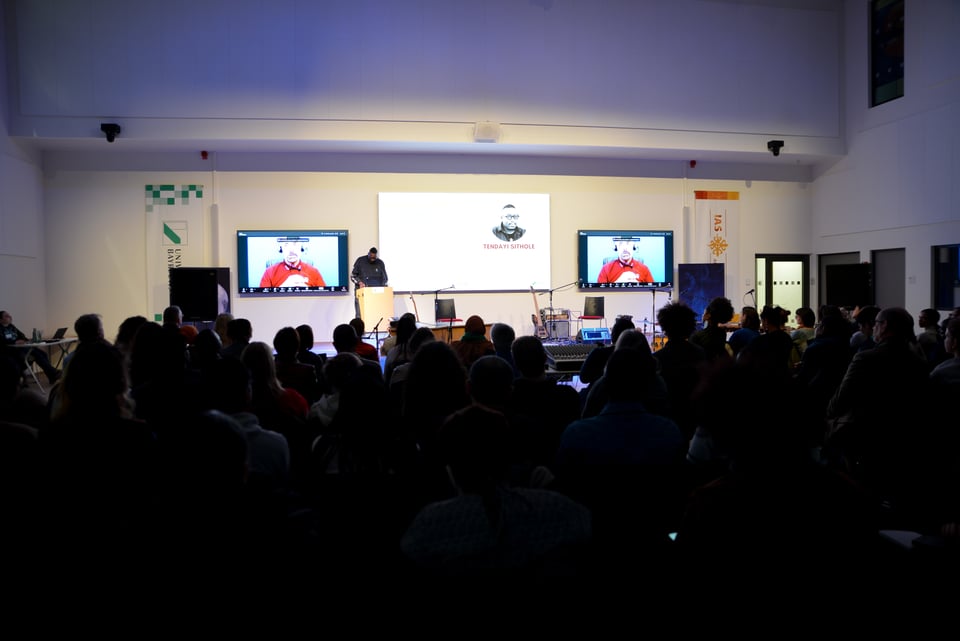
The lecture was framed by a multi-media installation, The Abyssal Zone, by the South African artist Christine Dixie of Rhodes University. Through layered projections and soundscapes, the installation evoked shifting depths, mineral textures and luminous surfaces. It created an atmosphere of immersion that resonated with Sithole’s meditation on light, darkness and the generative potential of what lies beneath the visible surface.
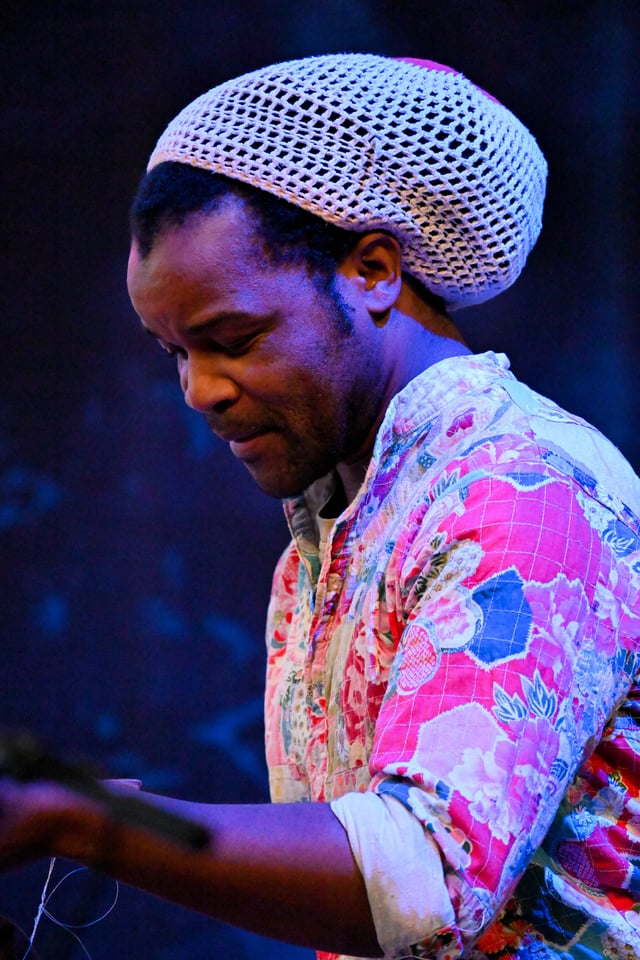
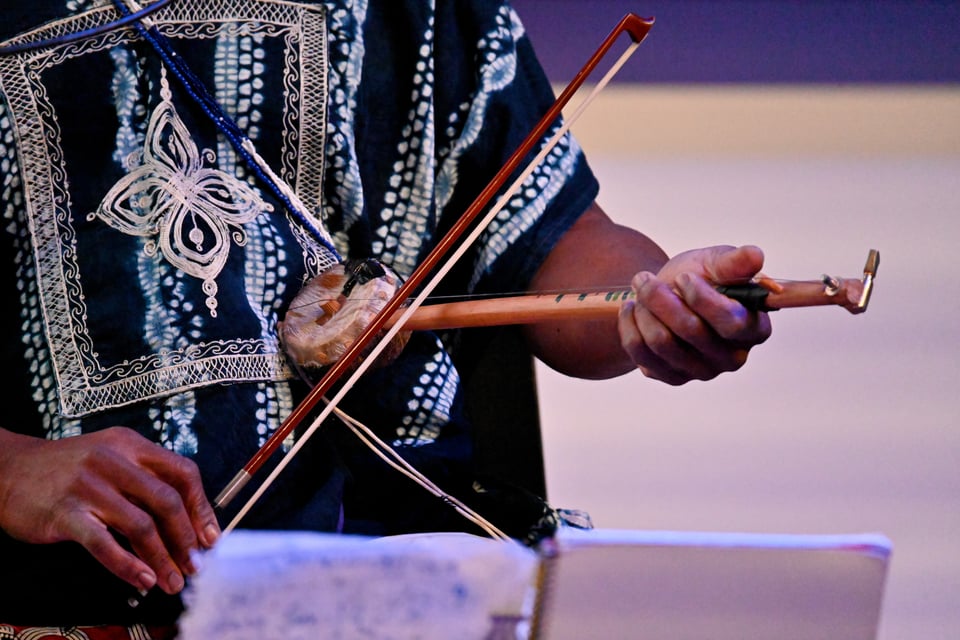
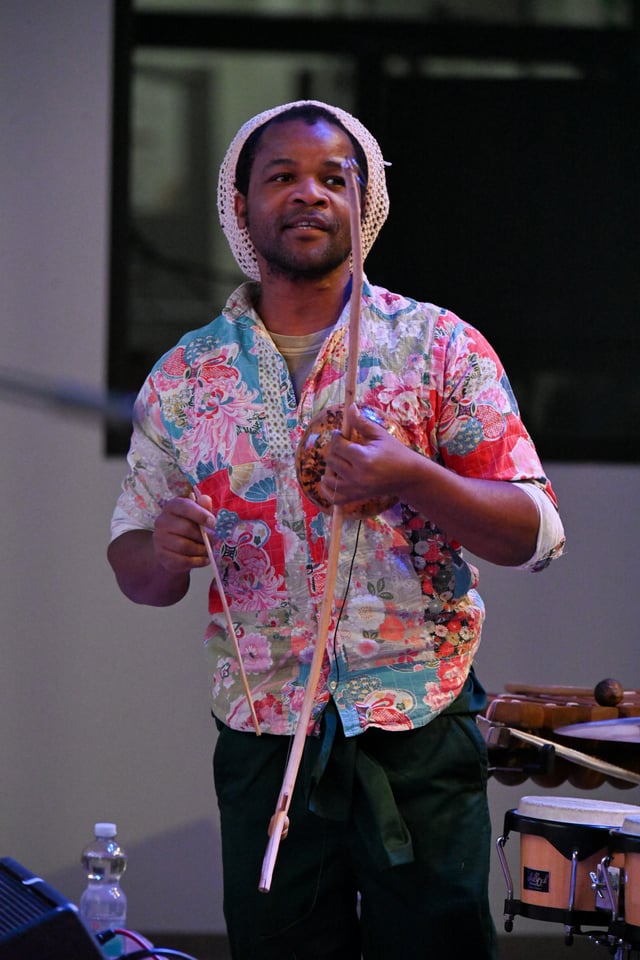
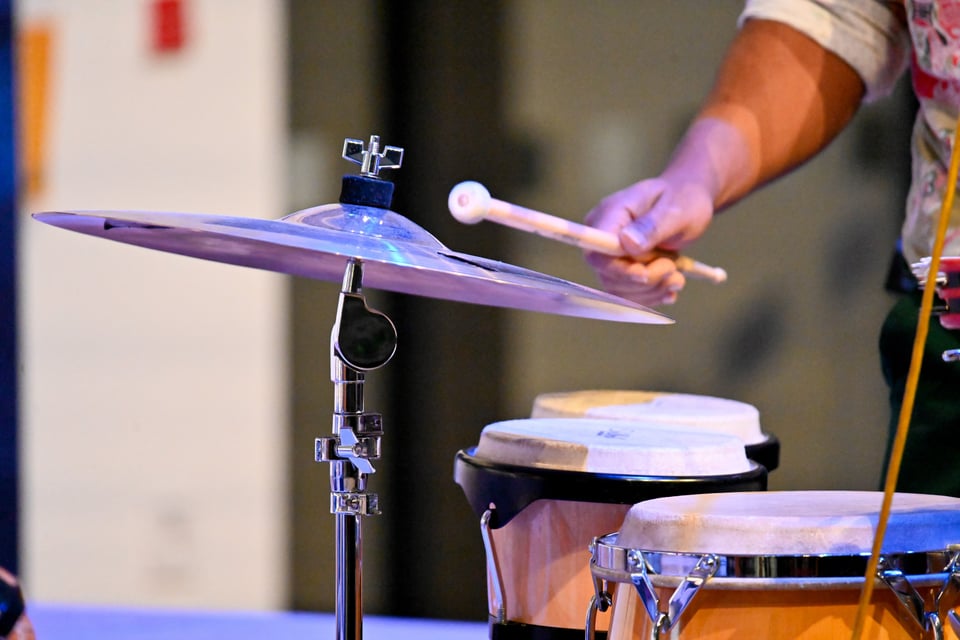
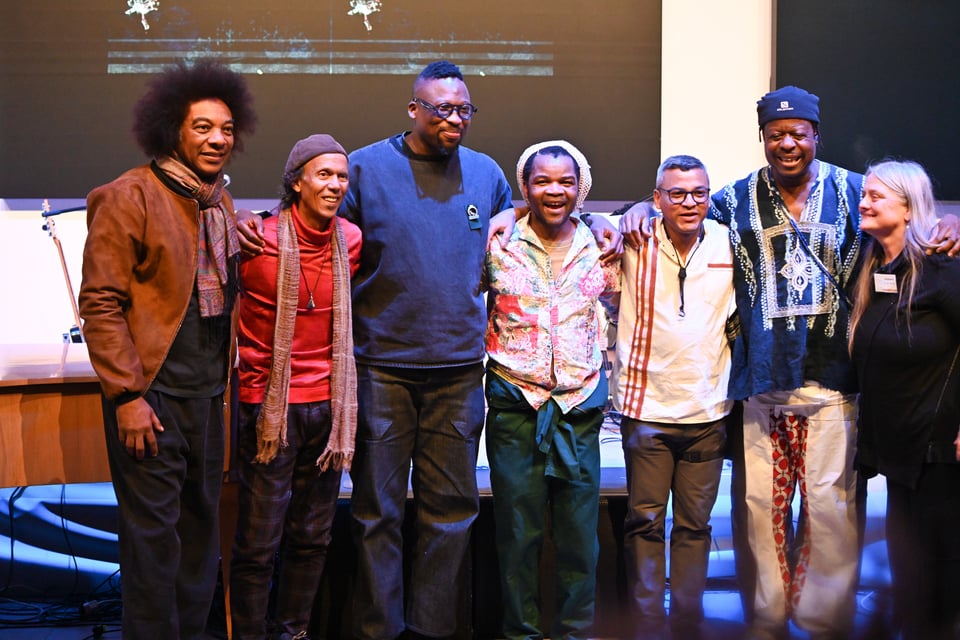
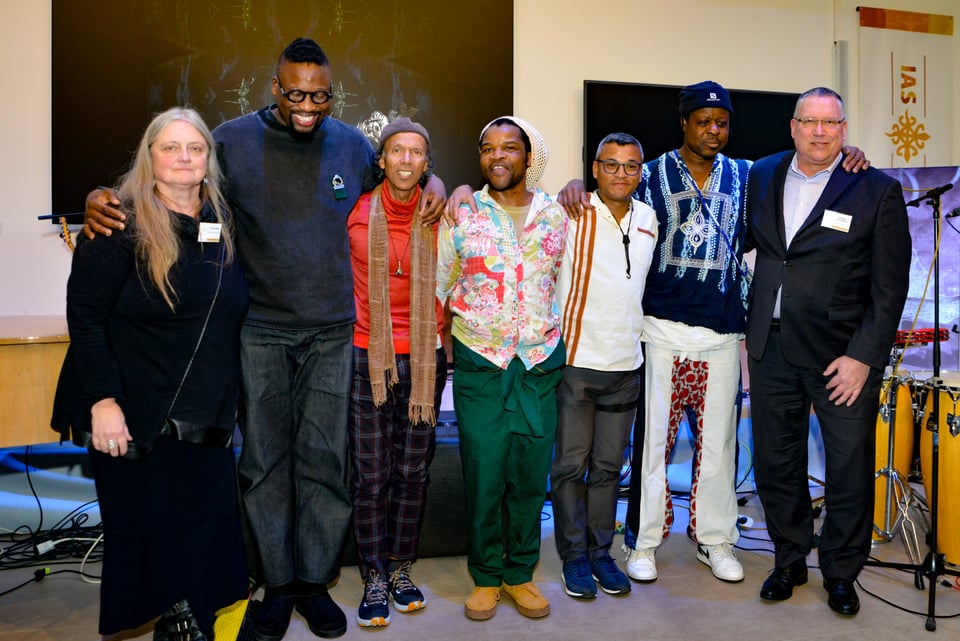
Following the keynote, the evening moved seamlessly into a live concert featuring Jean-Pierre Joséphine, Andry Michaël Randriantseva, Childo Tomás and Matchume Zango, four internationally acclaimed musicians whose work bridges jazz, Indian Ocean traditions and African musical forms. In a memorable moment of transition, Sithole briefly joined the musicians in an improvised exchange, allowing thought and sound to meet before handing the stage fully to the ensemble. The gesture embodied the evening’s central theme: worldmaking as collaborative practice.
As the first major event of its new phase, the Cluster of Excellence’s 2026 New Year Lecture set a tone of intellectual depth and artistic experimentation. By weaving together philosophy, image and music, it affirmed the Cluster’s commitment to exploring how worlds are imagined, contested and remade. In the interplay of black, blue and beautiful, the evening offered not only reflection but enactment: a shared illumination at the start of a new chapter.