

Important Dates

New Year Lecture 2026
22.01.2026, 5 pm
FZA, Campus and online

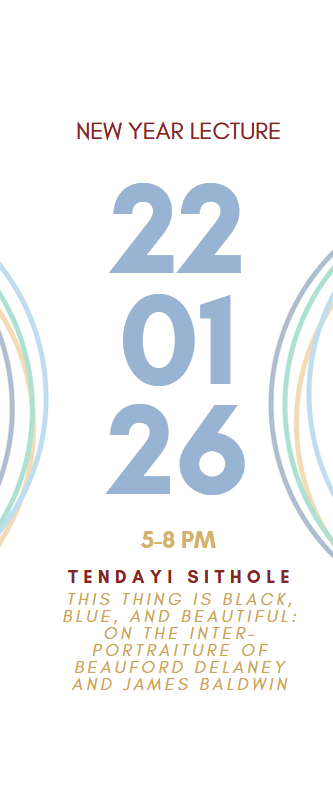
Each year, the Africa Multiple Cluster of Excellence opens its calendar of activities with the New Year Lecture – a public event featuring distinguished speakers who engage with questions and concepts central to the Cluster’s research agenda.
In 2026, as the Cluster embarks on its second funding phase, the New Year Lecture will serve as a moment to pause and reflect on our achievements but also to look forward – to deepening our collaborations, expanding our perspectives, and shaping new directions in the reconfiguration of African Studies.
The New Year Lecture 2026 at the University of Bayreuth’s Africa Multiple Cluster of Excellence will take place on 22 January 2026 at the FZA Congress Hall and online via Zoom, opening the Cluster’s annual programme as it enters its second funding phase.
The event will feature a keynote lecture by Prof. Dr. Tendayi Sithole titled “This Thing is Black, Blue, and Beautiful: On the Inter-Portraiture of Beauford Delaney and James Baldwin,” which explores aesthetic and political engagements that reframe questions of race, beauty, and artistic expression. In addition to the lecture itself, the programme will be enriched by a concert with performances by Jean-Pierre Joséphine, Andry Michaël Randriantseva, Childo Tomás, and Matchume Zango, and an artist presentation by Christine Dixie from Rhodes University, offering creative perspectives that complement the Cluster’s research goals in the second phase.
New Year Lecture 2026
5 pm - FZA Congress Hall, campus Uni Bayreuth and online via Zoom (see below for link)
- PROGRAMME -
- Welcome:
Prof. Dr. Rüdiger Seesemann, Dean Africa Multiple Cluster of Excellence - Introduction:
Prof. Dr. Ute Fendler, Spokesperson Africa Multiple Cluster of Excellence - Keynote:
Prof. Dr. Tendayi Sithole, Professor in the Department of Political Sciences, University of South Africa
Concert: Jean-Pierre Joséphine, Andry Michaël Randriantseva, Childo Tomás, Matchume Zango
Multi-media installation by Christine Dixie from Rhodes University, South Africa
The event will be translated into British Sign Language!
Please RSVP with exc2052@uni-bayreuth.de
Join Zoom Meeting: https://uni-bayreuth.zoom.us/j/68758756516?pwd=N9JmdJptRJm2ANqrKyiWOMbM80s6HW.1
(Meeting ID: 687 5875 6516 / Passcode: 607790)
DETAILED INFORMATON
About the lecture:

Tendayi Sithole "This Thing is Black, Blue, and Beautiful: On the Inter-Portraiture of Beauford Delaney and James Baldwin"
“In this lecture, I propose to dwell on and with two important figures of the 20th century – namely, Beauford Delaney (artist) and James Baldwin (writer). It is in this mode of dwelling where a case will be made on the concept I would modestly call inter-portraiture. In 1944, Delaney made a painting entitled Portrait of James Baldwin and in 1965, Baldwin wrote an essay entitled Beaford Delaney: A Portrait and, understood as acts of radical love. It is these two acts that cement the meaning of inter-portraiture. The way these figures portrayed each other refiguring the world – that is, creating other conditions of possibility amid impossibility. In Delaney and Baldwin, the world defined and structured by the ugliness of racism had to be challenged through the politics of black radical imagination. I also propose that these politics map out trajectories where the black, the blue, and the beautiful meet, and this is the generative encounter where inter-portraiture becomes a mode of being-black-in-the world. Since both figures love the blues, and they aesthetically expressed themselves in the influence and confluence of this genre. Also, for them, beauty was a necessity, and they dared to dwell in it through their call-and-response – say, inter-portraiture.
About the concert:
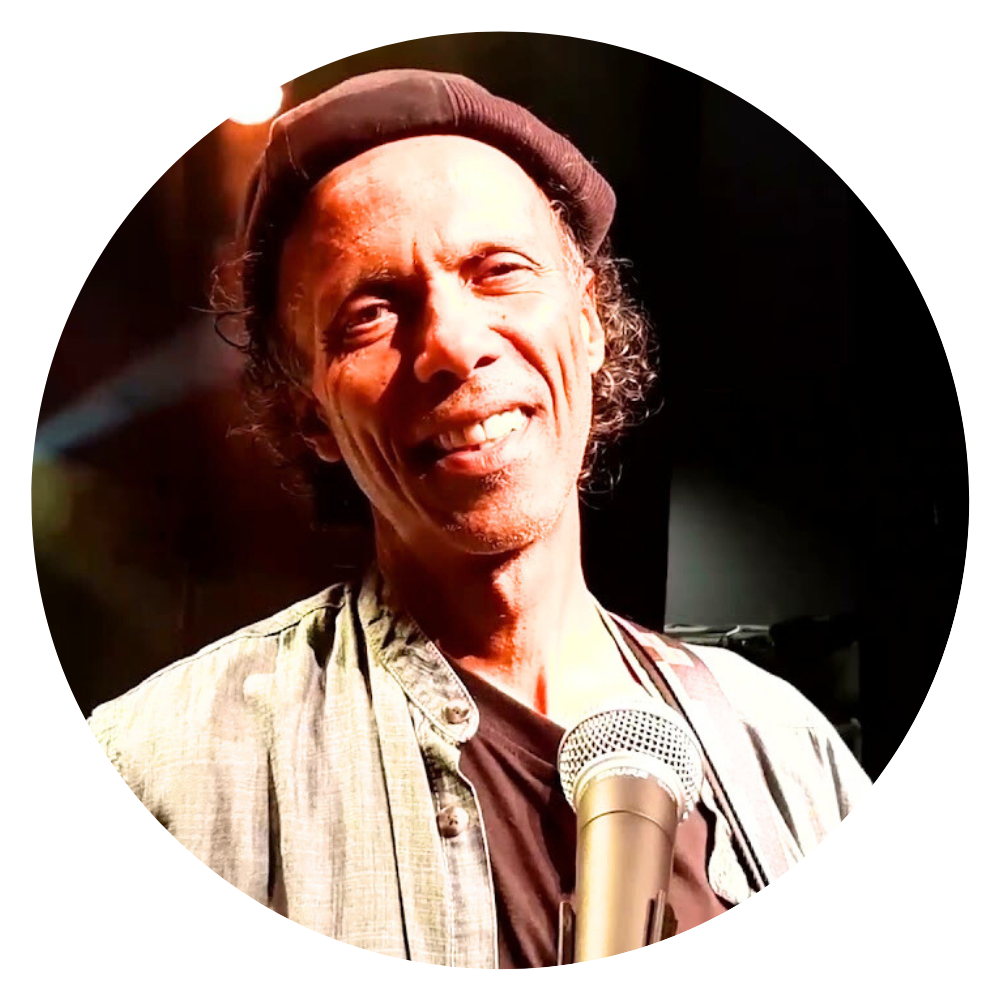
Jean-Pierre Joséphine
Jean-Pierre Joséphine is a Reunion-born guitarist and composer who began playing guitar at a young age and developed a diverse style influenced by Indian Ocean traditional music, jazz, Brazilian and Latin rhythms, as well as soul, rock, pop, and classical traditions. He later trained in jazz at the IACP in Paris and in classical guitar with Spanish master Alberto Ponce, and has also taught guitar while studying ethnomusicology at the University of Paris VIII.

Andry Michaël Randriantseva
Andry Michaël Randriantseva, often known simply as Andry Mika, is a professional multi-instrumentalist from Madagascar celebrated for his work on piano, trombone, keyboard, and other instruments, and for blending jazz and world music styles. He has performed with ensembles such as the international group Josefinn Austral View and leads musical projects that highlight the rich cultural fusion of the Indian Ocean region.

Childo Tomás
Childo Tomas is a renowned bass player, who has done a lot of research of traditional and popular music from different corners of Africa, particularly from Mozambique. Besides his individual work, he plays with the Cuban Jazz pianist Omar Sousa which shows the wide range of Tomas’ music styles. This knowledge and experience, along with his virtuosity on the bass has brought Childo critical acclaim. Besides the electric bass as lead instrument, Childo also plays the mbira, the xivocovoco and the xigovia.
Find out more about Childo Tomás' Cluster engagements here.
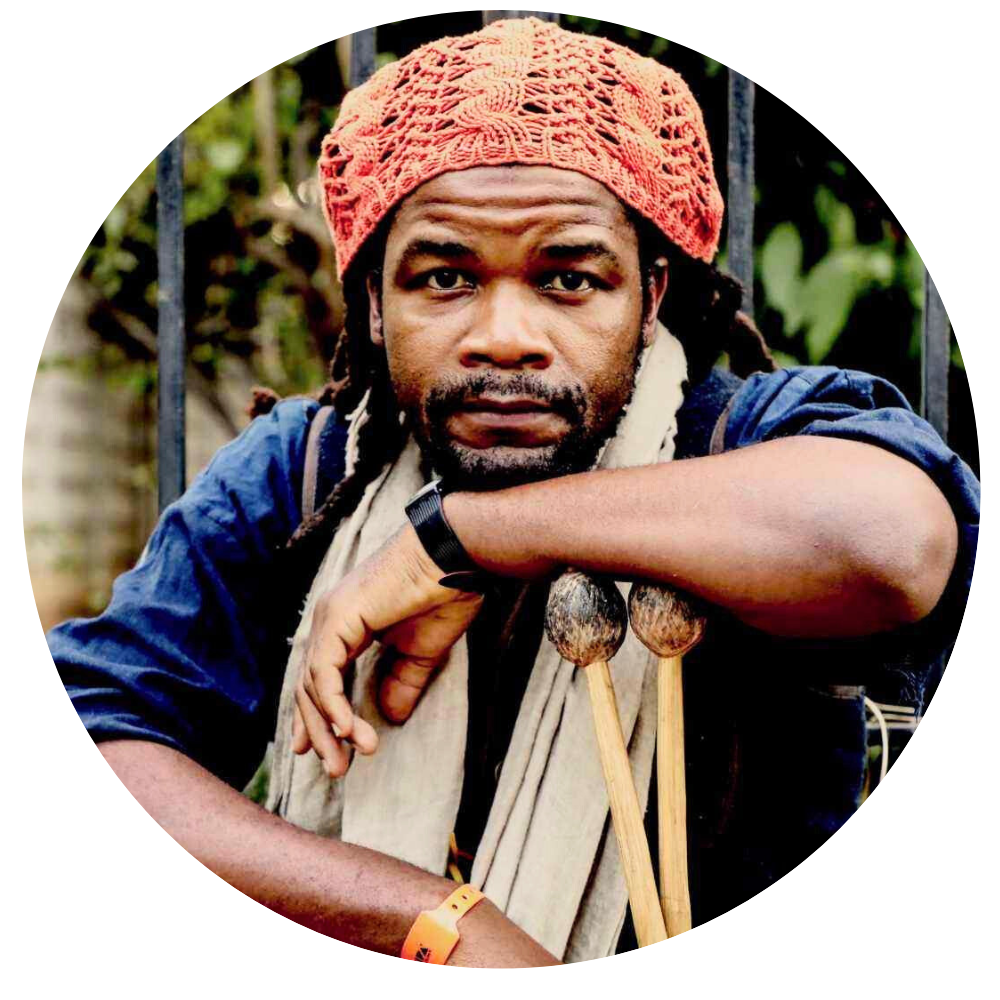
Matchume Zango
“Matchume” Cândido Salomão Zango has dedicated himself to Mozambican traditional music. His family’s roots lie in Zavala, in the heart of the country’s timbila tradition, a city in the Inhambane Province. From the age of six, Matchume felt inspired by this long and passionate legacy of music and percussion, and began to play and study the traditional instruments and compositions. He is a virtuoso on instruments such as the mbira, the xitende and the djembe drums and is currently regarded as one of the best masters of the timbila, which is also a World heritage instrument.
In September 2017, he released his first solo album titled 'Wata M'cande' followed by Tatei Watu in 2018.
He has performed, taught and conducted artistic and cultural projects in such countries as Austria, Belgium, Burkina Faso, Cameroon, Canada, Cape Verde, Chad, China, Denmark, France, Gabon, Germany, Guinea-Bissau, Japan, Madagascar, Mali, Norway, Portugal, Reunion Island, Rwanda, Senegal, South Africa, South Korea, Switzerland and Zimbabwe.
He has collaborated with international artists in music, theater, dance and film, and recorded albums with Timbila Muzimba, MoSomeBigNoise and Kubilai Khan.
Find out more about Matchume Zango's Cluster engagements here.
About the Artist Presentation:
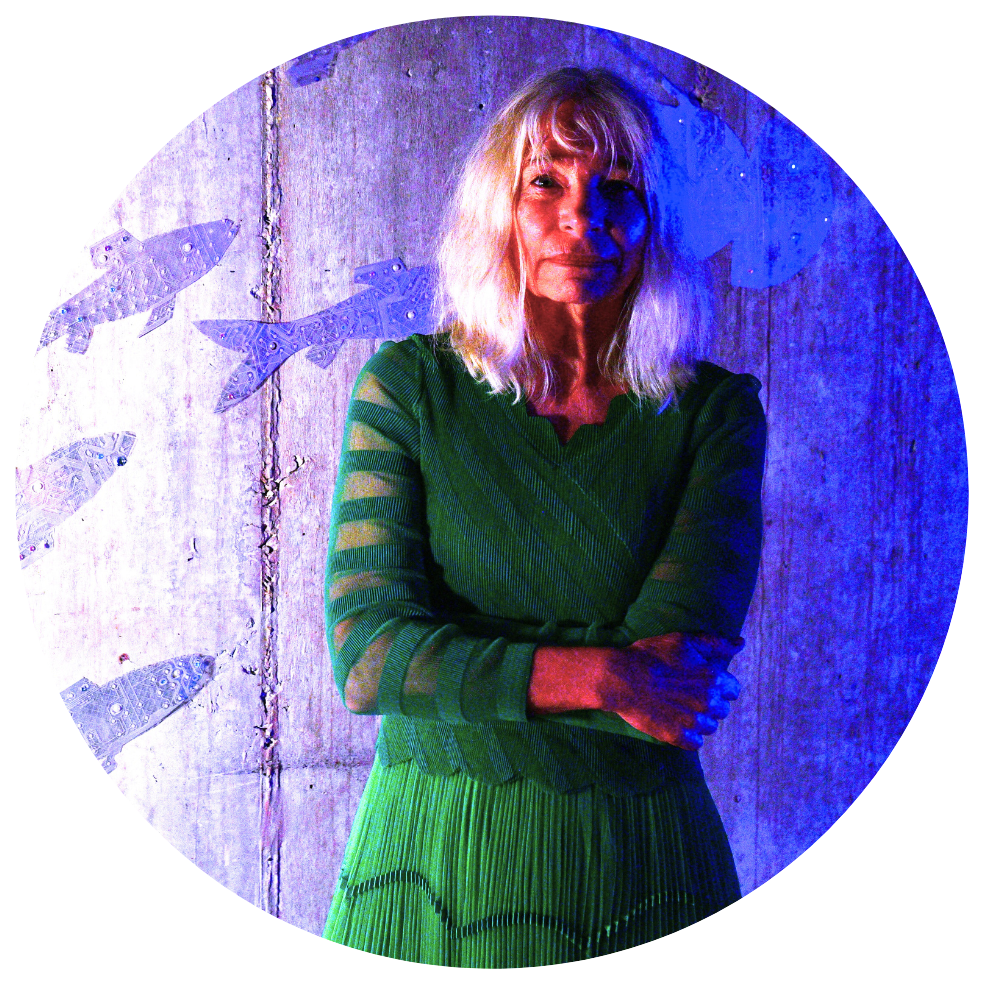
Christine Dixie
Christine Dixie is a Senior Lecturer in the Fine Art Department at Rhodes University. The colonial history that haunts the town of Makhanda, where she lives and works has compelled her preoccupation with Europe’s legacy in Africa.
Typically, Dixie’s print series are part of a body of work that also finds expression through films or elaborate installations. In this way her art is not limited to a specific medium, and as with films has a narrative quality to it, presenting a developing story, which advances with each image, further blurring the boundaries between the present and the past.
Her work is included in national and international collections including The New York Public Library, The Smithsonian National Museum of African Art, The Iwalewahaus Museum, The Brooklyn Museum, The Standard Bank Gallery and the SABC Art Collection, The Iziko National Art Museum
The Abyssal Zone
A multi-media installation by Christine Dixie.
The Abyssal Zone is dark, silent, and secret, inhabited by uncanny, luminous creatures which float above shifting sands. The sea floor gleams with gold, platinum, titanium, copper, cobalt, and manganese, minerals that are critical for batteries, solar panels, wind turbines, and electric vehicles.
In the 17th century, European ships floated across the ocean, enticed by lands of gold and the promise of fortunes. Stars guided the ships; elusive planets lit the dark surfaces.
If a ship had sunk, it might have come to rest on a seabed that held the very minerals it searched. This shadowy place is now threatened with the judder of collectors, the throbbing of tracked mining vehicles and pulsing bottom crawlers that spew toxic sediment plumes. Even the most remote, seemingly inaccessible parts of the planet are now threatened.
In the disrupted order depicted in this work, place and space are inverted. Fish, still glittering and beautiful are now inedible and swim alongside spacecraft. Our dreams are haunted by reverberations from the Abyss, perverse echoes of sky and sea, water and air, sustenance, and poison.