

News
CHRONICLES 8-Building Cultural Worlds: Wanda Gardens Meets Richard Wagner Museum
6.11.2026
CHRONICLES 8-Building Cultural Worlds: Wanda Gardens Meets Richard Wagner Museum
By
Egara Kabaji
In the year 2016, I embarked on an experiment to create a cultural space in my hometown of Kakamega, western Kenya. I established Wanda Gardens. The ambition was to create a theatrical space where people could meet, interact, read books and entertain themselves. I wanted a place that would provide a home for artistic performances, cultural festivals and intellectual conversations. It was a wild dream. In a society where every investment is measured by its profitability, I looked like a confused brat to many.
Over the years, Wanda Gardens has gradually acquired an identity that extends beyond its original conception. It has become a cultural centre accommodating different forms of artistic and social expression. We regularly hold festivals there to celebrate culture and creativity. It is also home to the Kakamega Book Club, arguably the most active book club in East Africa. Through its literary engagements, the club has created opportunities for readers to interrogate books and participate in conversations about society.
Wanda Gardens also has a cockpit for cockfighting, a popular traditional pastime in Kakamega country. This might appear an unusual companion to a literary club, but that is precisely part of the cultural diversity I have sought to accommodate. Cultural spaces need not be restricted to expressions that conform to conventional definitions of high culture. They can provide room for different practices through which communities express their identities and social experiences.
A deliberate feature at Wanda Gardens is the Francis Imbuga Memorial Library. By establishing this library, I wanted to contribute to the preservation of the literary memory of one of Kenya's most celebrated playwrights. Professor Imbuga's legacy deserves to remain accessible. The library therefore gives this legacy a physical presence.
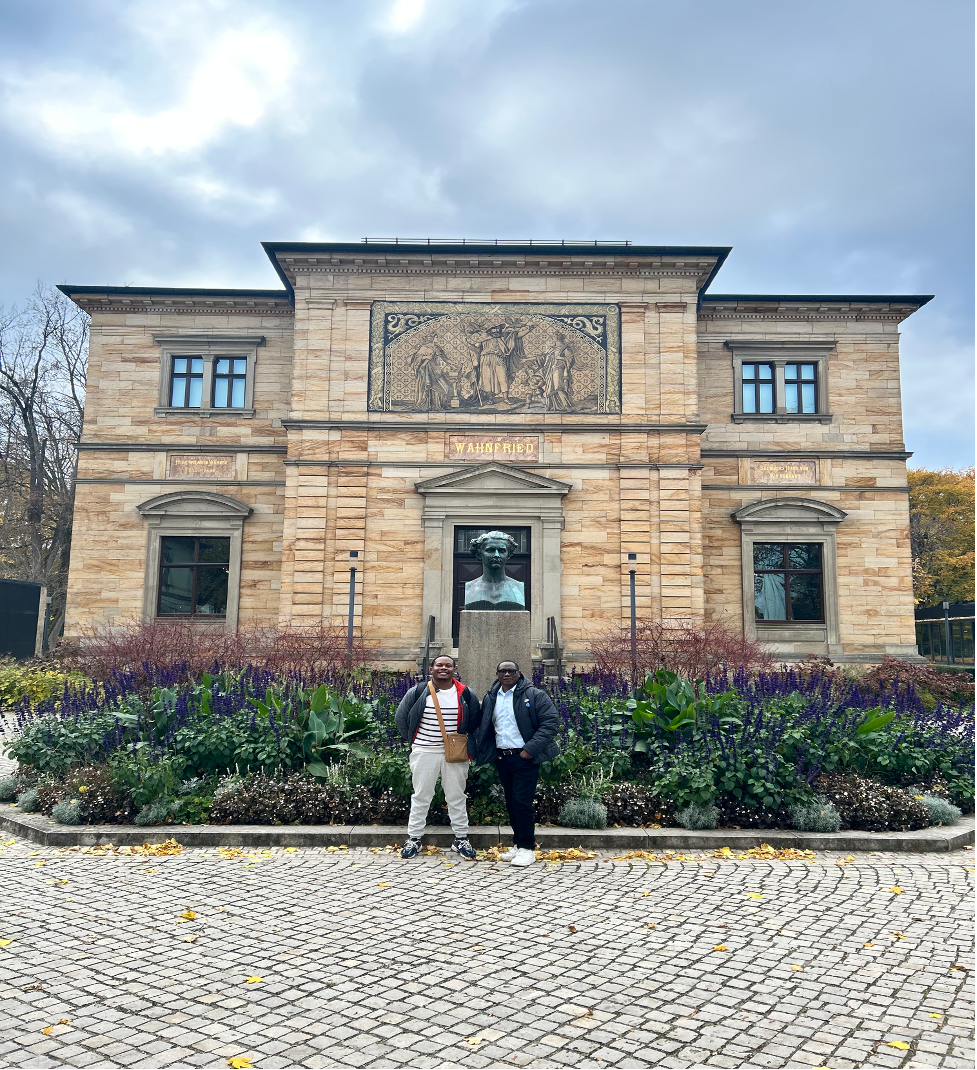
What does it mean to create such a space? What begins as an idea in an individual's imagination eventually acquires physical form, attracts people and develops a life of its own. Perhaps this is one way of participating in the making and remaking of the world. It was against this background that I found myself visiting the famous Richard Wagner Museum in Bayreuth. I knew nothing about Richard Wagner when I arrived in Bayreuth. I certainly had not anticipated that my stay in this German university town would lead me to an encounter that would make me reflect on my own cultural experiment in Kakamega.
I visited the museum with my son, Kabaji Egara, who had travelled all the way from Ipswich, Britain, to spend time with me in Bayreuth. He doubled as my cameraman as we explored the museum and learned about aspects of Wagner's life and intellectual world. As we moved through the exhibitions, I found myself thinking less about the composer as an individual celebrity and more about the relationship between artistic imagination and the preservation of memory.
For my Kenyan readers, let me fill you in. Richard Wagner (1813–1883) was a German composer, dramatist and theatre director whose influence transformed the development of opera and musical theatre. He believed in bringing together music, drama, poetry, performance and visual expression into a comprehensive artistic experience. His ambition was not simply to compose music for existing theatres. He wanted a theatrical space that would accommodate his artistic vision.
This ambition eventually found expression in the Bayreuth Festspielhaus. Wagner was instrumental in bringing this dedicated theatre into existence, and it opened in 1876 with the first complete performance of his four-part operatic cycle, The Ring of the Nibelung. The theatre was designed around his understanding of the relationship between performers, music and audiences.
I found this particularly interesting because it took me back to Wanda Gardens. I had not established Wanda Gardens with Wagner in mind. Indeed, I arrived in Bayreuth without knowing much about him. But here I was discovering an unexpected connection between his determination to create a dedicated theatrical space and my own efforts to establish a cultural centre in Kakamega. Our circumstances, resources and artistic ambitions are different. I am not suggesting that Wanda Gardens is another Bayreuth Festspielhaus. No. What interests me is the shared impulse to create spaces in which culture can find expression and communities can participate in artistic and intellectual life.
One of the aspects of the museum that particularly engaged my attention was its commitment to preserving memory. The collections, manuscripts, letters, photographs, personal belongings and historical records provide opportunities to understand Wagner beyond the music for which he is remembered.
I have a particular fascination with memory. I consider remembering an important cultural and intellectual responsibility. Museums, archives and libraries are not merely repositories of old objects and books. They are institutions through which societies negotiate their relationships with the past. They determine what is preserved, interpreted and made available to future generations.
This is one of the reasons I am particularly interested in the library at Wanda Gardens. The Francis Imbuga Memorial Library represents my modest contribution to preserving Kenya's literary heritage. Imbuga was an extraordinary playwright whose works interrogated power, authority, social injustice and the human condition. I believe that his literary contribution should not disappear with the passing of his generation. His work must remain available for reading, discussion, criticism and reinterpretation.
Wagner did not develop his artistic ideas in isolation. He was influenced by philosophers, composers and other creative thinkers. His relationship with Friedrich Nietzsche began in admiration and intellectual companionship but eventually deteriorated into a serious philosophical disagreement. Ludwig Feuerbach influenced his earlier thinking, while Franz Liszt provided friendship and practical support during difficult periods of his life.
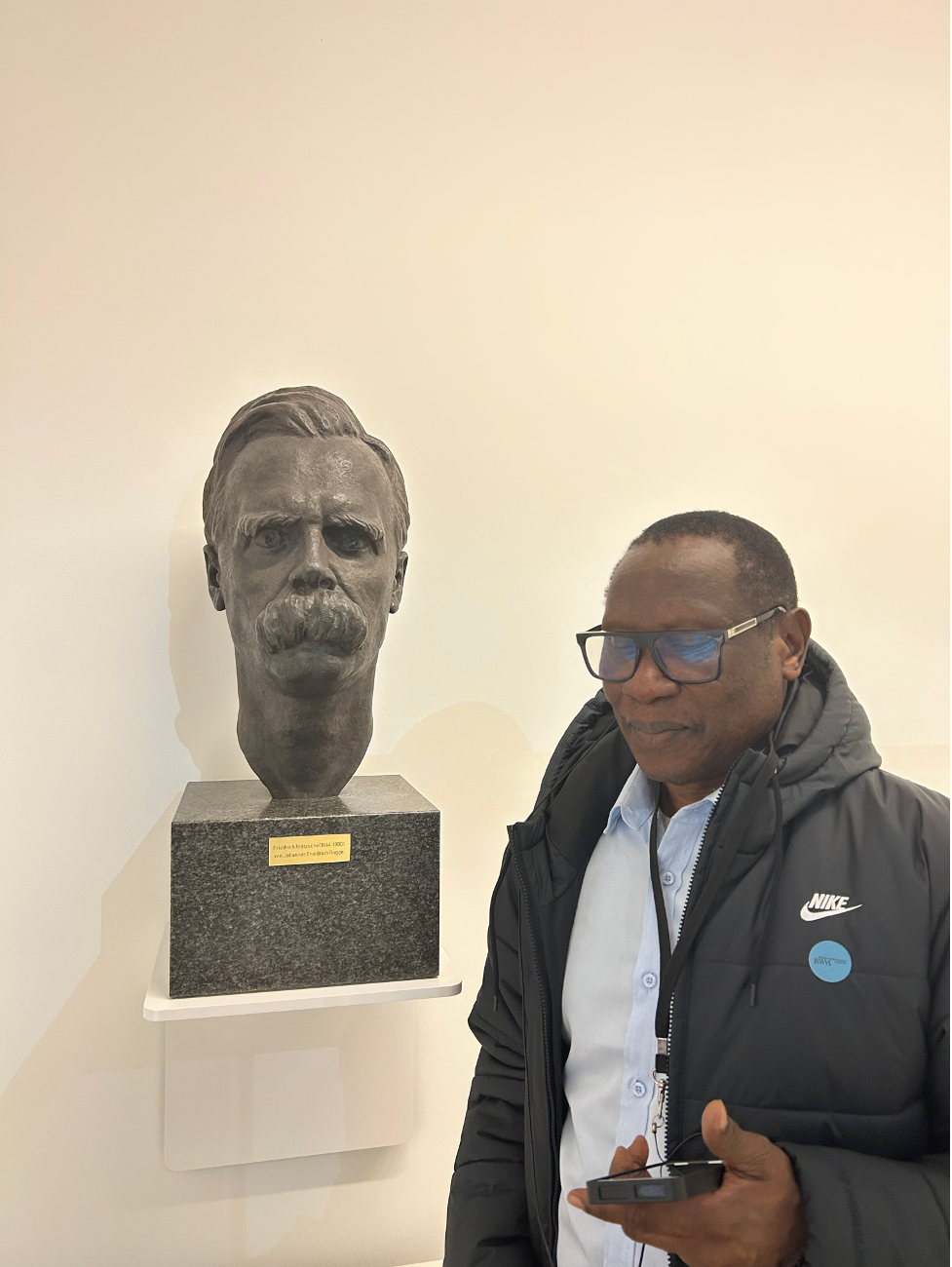
These relationships demonstrate the importance of intellectual experiences in the production of knowledge and creativity. Ideas are rarely developed in isolation. They emerge and sometimes change through conversations, disagreements, friendships and encounters with other people's work. This is something I have continued to appreciate during my stay in Bayreuth. The African Cluster of Excellence provides an environment in which scholars from different intellectual and cultural traditions can meet, interrogate assumptions and imagine alternative ways of understanding the world.
However, an honest engagement with Wagner cannot overlook his antisemitism. His essay Judaism in Music, first published anonymously in 1850 and later expanded and republished under his own name in 1869, expressed deeply prejudiced views about Jewish people and their contribution to music and culture. These were not insignificant personal disagreements. They were expressions of antisemitism that deserve unequivocal condemnation.
This contradiction is important. Wagner made significant contributions to music and theatre, but his artistic achievements did not make him morally infallible. Indeed, the later appropriation of his music by the Nazi regime adds another difficult dimension to his historical legacy. We must be able to recognise artistic achievement without sanitising the prejudices and harmful ideas of the people responsible for it.
I have always believed that human beings are complicated. Every human being has weaknesses, although not all weaknesses carry the same moral consequences. But recognising this complexity should not be an excuse for wrongdoing. Rather, it should encourage us to approach historical personalities with intellectual honesty. We must remember their contributions without concealing their failures. Memory that celebrates achievements while suppressing uncomfortable truths is incomplete.
Let me go back to Wanda Gardens. How do we ensure that the space remains open to new ideas, critical conversations and different forms of cultural expression? These questions connect my experience in Kakamega with Bayreuth. The African Cluster of Excellence has encouraged me to think about the making and remaking of worlds from African perspectives. I find this particularly stimulating because world-making is not an abstract intellectual exercise. It happens through the institutions we establish and the memories we preserve.
My experience has not made me look at Wanda Gardens as an imitation of a European cultural institution. Rather, it has helped me appreciate my own experiment from a different intellectual perspective. Cultural imagination is not geographically confined. People in different parts of the world can independently recognise the importance of creating spaces where artistic expression and cultural memory can flourish.
This is one of the lessons of my Bayreuth experience. Sometimes we travel across continents not to discover what we should copy but to understand more deeply what we have been trying to accomplish at home. In this conversation, I am reminded that remaking the world begins when we dare to imagine something that does not yet exist and take responsibility for giving it physical and intellectual life.
END